


Shree Mahavir Bhagwan: Past Lives Part-1 of the Twenty-fourth Tirthankara
In the life of Shri Mahavir Bhagwan, the last Tirthankara of this time cycle, we can witness extraordinary equanimity and absolute detachment. In His first birth, He attained Samkit (right belief) through exceptional hospitality and respectful service. In His birth as Marichi, due to pride in His lineage and utsutra prarupana fault, He bound extremely severe karmas. In His birth as Vishwabhuti, due to ego and anger, He developed enmity with Vishakhanandi. Let us read in detail about the first to seventeenth past lives of Lord Mahavira.
First Birth – Naysar and Second Birth – Celestial World
Out of the twenty-seven lives of Bhagwan Mahavir, the first birth was of Naysar. Naysar was a woodcutter. He was deeply devoted and virtuous in nature. He used to go to the forest every day to earn through hard work. Enduring intense hardship under the scorching sun, in the cold, and in the rain, he would cut wood in the forest and bring it back, offering all of it to the king for his service. From whatever livelihood he received in return, he sustained his life. He was very poor, but generous at heart. Whoever came to him, he would welcome them with great love and heartfelt hospitality. He would lovingly engage in spiritual conversations with his guests. It was his rule that if any guest came to him, he would feed them first and only then eat himself. He would constantly be on the lookout for a guest to serve, thinking, where can I find someone to whom I can offer food! After feeding others, he would lovingly eat whatever remained. Every day, he would take food with him into the forest, and only after offering it to someone else would he eat himself; such was his vow.
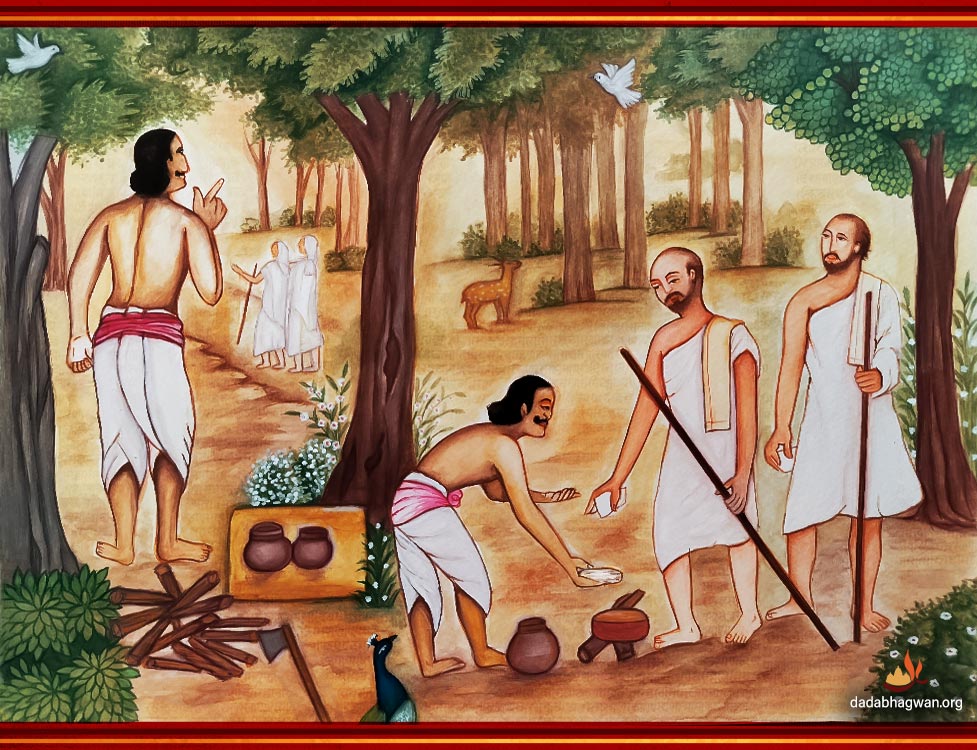
Once, it so happened that Naysar had gone into the forest to cut wood when he saw a group of Sadhus (monks) there. A Sadhu is not an ordinary state of being. One who has attained the state of the Self is called a Sadhu. The state that arises after realizing the Self is known as the state of a Sadhu. Simply changing clothes and sitting as an ascetic does not make one a Sadhu; it is the internal state that is called Sadhupad.
One day, when Naysar was cutting wood in the forest, a group of monks lost their way while passing through. They wandered about, trying to find the path, but couldn’t locate it, as their guide had gone missing somewhere. All the monks had gone to a village to ask for alms, but they didn’t receive any food there. Their guide, tired and hungry, left in frustration and went off somewhere else. The monks were left behind, all alone. While wandering and searching, they reached the forest, and there they met the woodcutter Naysar.
It was midday and very hot; Naysar was extremely thirsty and hungry. He was about to begin his meal and started looking around, hoping he might find someone to share it with, to get the opportunity to offer hospitality. As he looked around, he saw the monks, hungry, thirsty, exhausted, and staggering in weakness. Seeing this, his heart filled with compassion. Naysar went to the monks and asked, “This condition of yours! Even a heavily armed warrior king wouldn’t wander alone here. How are you roaming so unknowingly like this? I come here daily, so I know the whereabouts. Otherwise, this place is home to tigers, bears, lions, and bandits! What will they do to you?” Then a monk said, “What is there to loot from us! Today, we don’t even have anything to eat. We have no other option. We are lost and are searching for our path.” Then Naysar was filled with deep compassion and took all the monks to his place. There, he gave them everything he had and did not eat anything himself. He only drank a single sip of water because after offering everything to them, nothing was left for him. Even without eating himself, he served the guests with devotion. He served the monks with such deep reverence and heartfelt devotion that it was something truly exceptional! While serving them with that pure feeling, at that very moment, Naysar attained Samkit, and he was blessed with a very high spiritual state! Everyone serves food, but serving it with true sincerity is something entirely different. True values are when not even a trace of negative inner intent arises towards a guest.
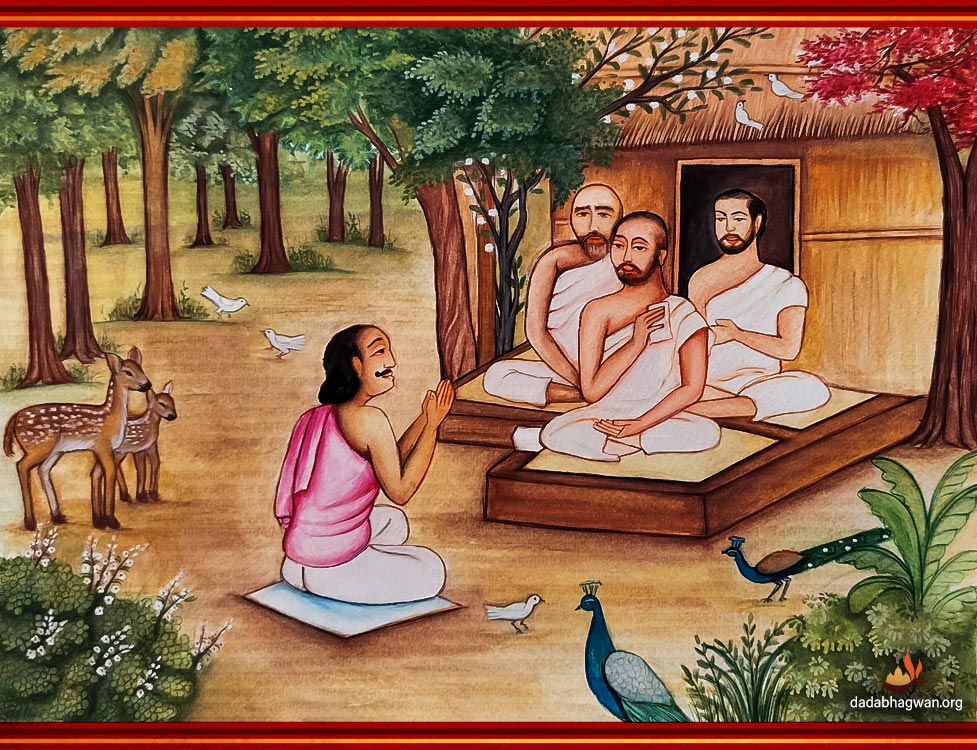
Through his hospitality, Naysar experienced a deep awakening of devotion. He received spiritual insight from the monks. They conducted a profound Satsang (spiritual discourse), which led to a radical transformation in Naysar’s heart. In this life, due to his sincere hospitality, he bound a lifespan in the celestial realm. His virtuous thoughts, service to monks, determination to never let anyone go hungry, constant hospitality, such noble virtues, and the spiritual insight received from the monks led him to attain Samkit.
Samkit means a complete transformation of one’s vision. It is when the mithya drashti (deluded vision) is replaced by the right vision, leading to the awakening of Atmadrashti (the right belief that ‘I am pure Soul’). When does Samkit happen? When one meets a true Gnani (the One who has realized the Self and is able to do the same for others), who gives insight and awakens us! Stay in search of such a Gnani. While searching for such a Gnani, one day we too will attain Samkit, just like Naysar did.
After attaining samkit in his previous birth as Naysar, Lord Mahaveer was then born in the celestial realm.
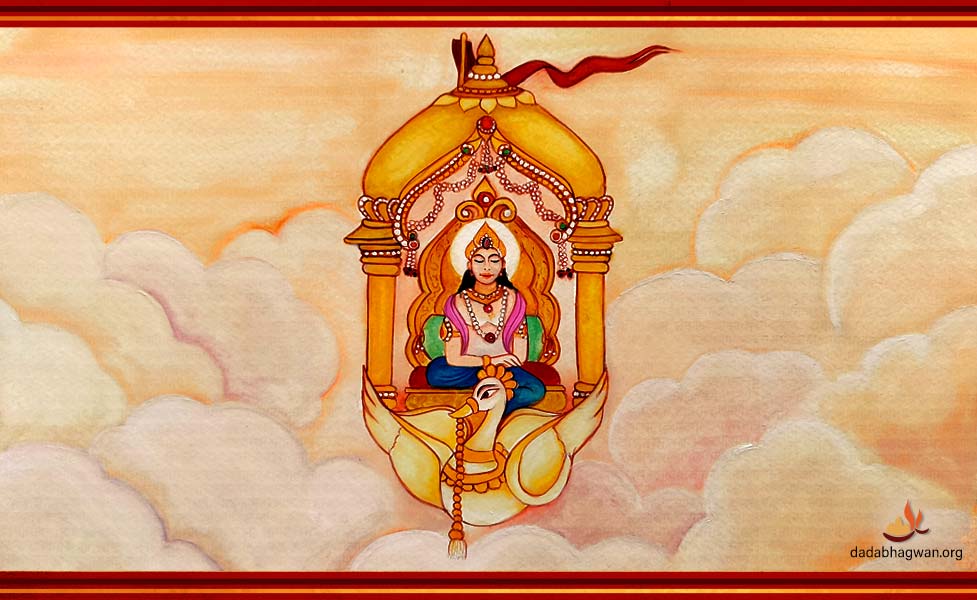
Third Birth – Marichi and Twelve Other Births
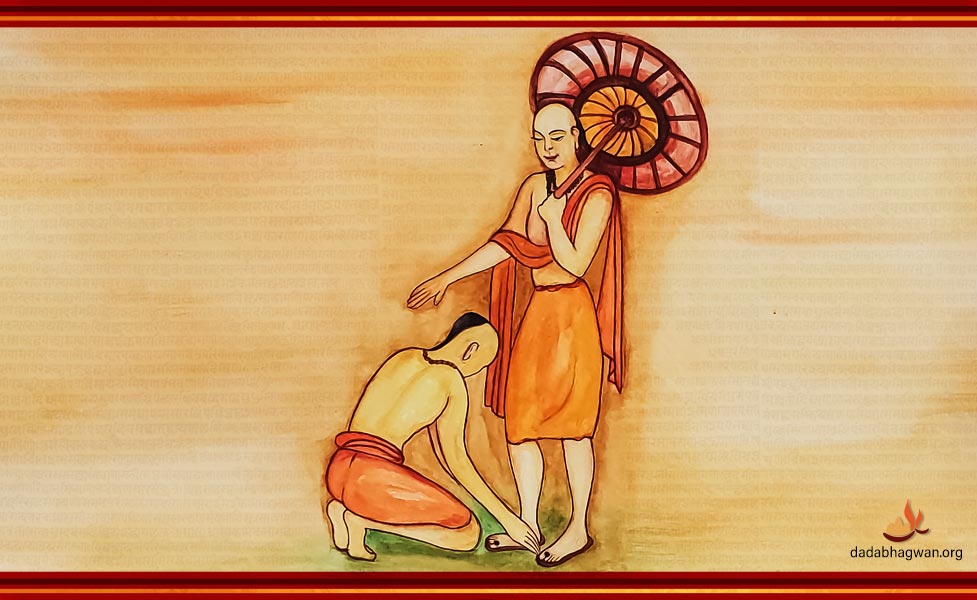
After completing his lifespan in the celestial realm, his third birth was as Marichi, the grandson of Lord Rishabhdev and the son of King Bharat Chakravarti. Marichi was the son of King Bharat Chakravarti, and Bharat Chakravarti was the son of the first Tirthankara, Lord Rishabhdev. After Lord Rishabhdev took Diksha (renunciation), Marichi also took Diksha. Staying with the Lord, Marichi was making efforts to attain the path of liberation. The Lord taught him all the knowledge thoroughly and guided him to progress in Dhyan (meditation), Tapa (penance), and Japa (chanting). However, Marichi had a very delicate and tender heart; he could not endure hardships. All the rules and conduct of a monk were strict. Walking barefoot, plucking out the hair of the head by hand, wandering in the scorching sun - all this was unbearable for him. Therefore, Marichi deviated from the conduct of a monk and turned toward another path; he established a separate Tridandi path. He wore saffron attire and footwear, and kept an umbrella and a water pot with him - in this way, he changed many of the practices. Even then, he continued to accompany Lord Rishabhdev, but he followed his own conduct independently. The Lord, being absolutely detached, never said anything. He allowed things to be as they were; He did not object to anything.
Once, King Bharat Chakravarti came to bow down to Lord Rishabhdev. Bharat Chakravarti felt immense joy seeing how great his father was! He himself was a Chakravarti (the emperor of six continents, king of kings), and his father was a Tirthankar (the absolutely enlightened Lord who can liberate others)! Bharat Chakravarti asked Lord Rishabhdev, “Who else in our lineage is going to become a Tirthankara or a great person?” Lord Rishabhdev was a Keval Gnani (fully enlightened One who can enlighten others). He had complete knowledge about all the twenty-four Tirthankaras; everything was clearly visible to Him, beyond all limitations. The Lord said, “From our lineage, this son of yours, Marichi, will become the last Tirthankara of this Chovisi (the succession of twenty-four Tirthankar Lords in the third and fourth era of each half-cycle of time), known as Mahaveer. And Marichi will also be the same Chakravarti and the first Vasudeva Tripushta.” Hearing this, Bharat Chakravarti was overjoyed.
On one side, King Bharat Chakravarti went to Marichi, bowed down to him with full reverence, offered dandavat pranam (prostration), circumambulated him, and paid his respects. He was overwhelmed with joy, thinking that his son would become a Tirthankara, a Chakravarti, and a Vasudeva. King Bharat Chakravarti said to Marichi, “I do not bow to you merely as my son or as a monk. Though you are a Tridandi, I bow to you because in your future, you are destined to attain such exalted positions. You are going to be the last Tirthankara Mahavir.” Hence, I bow to you. Hearing this, Marichi asked, “Who told you this?” King Bharat Chakravarti replied, “Lord Rishabhdev.” If a Tirthankar Lord has said it, then the matter is final, beyond question. Hearing this, a great pride arose within Marichi, “Now I am going to become a Tirthankar, a Vasudev. My future is sealed! I am destined to be great. I belong to such a high lineage! My grandfather is a Tirthankara, my father is a Chakravarti, and I myself am destined to become the first Vasudev, then a Chakravarti, and finally the last Tirthankara! How great is our lineage!” Thinking this way, he became overwhelmed with intense pride and ego. Blinded by this arrogance, Marichi bound heavy, destructive karmas.
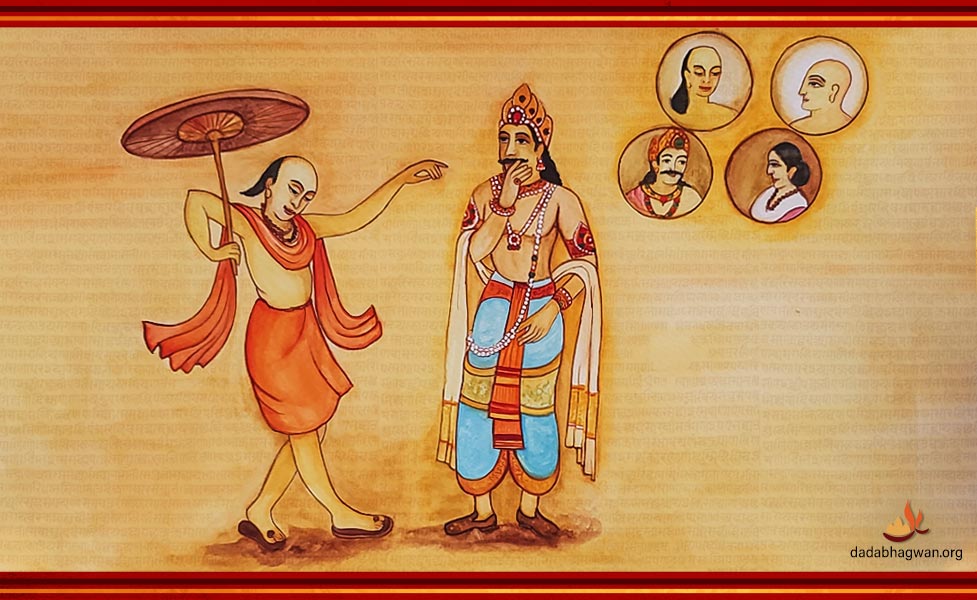
Marichi himself used to wander carrying a Tridandi, but whoever approached him to become a disciple, he would preach only the path of Vitarag dharma. He would share the words of Lord Rishabhdev with everyone. And if someone came to take Diksha from him, Marichi would clearly refuse and say, “I am not worthy to give Diksha. You must take Diksha only from Lord Rishabhdev.” But after Lord Rishabhdev attained Nirvana (ultimate/final liberation from all karma, from the physical body and the worldly cycle of birth and death also known as moksha), Marichi fell ill. There was no one to take care of him, so he decided to keep one disciple. One disciple came to him and asked, “What is the difference between the religion you preach and the one taught by Lord Rishabhdev?” To that, Marichi replied, “No, it’s all the same. That too is religion, and this is also religion.” And with that, the man became Marichi’s disciple. Just with that one small act, he committed utsutra prarupana; by preaching incorrectly, he diverted one seeker from the true path of Moksha and set him rolling down the opposite direction. Hence, Marichi bound intense karma, and as a result, many of his incarnations got prolonged; he had to wander through countless births. However, since he had practiced intense penances, after death, he was reborn in the celestial world. After that, he wandered through many lifetimes, he was born as a Brahmin many times and also took birth in the heavenly realm multiple times. In this way, he went through numerous incarnations.
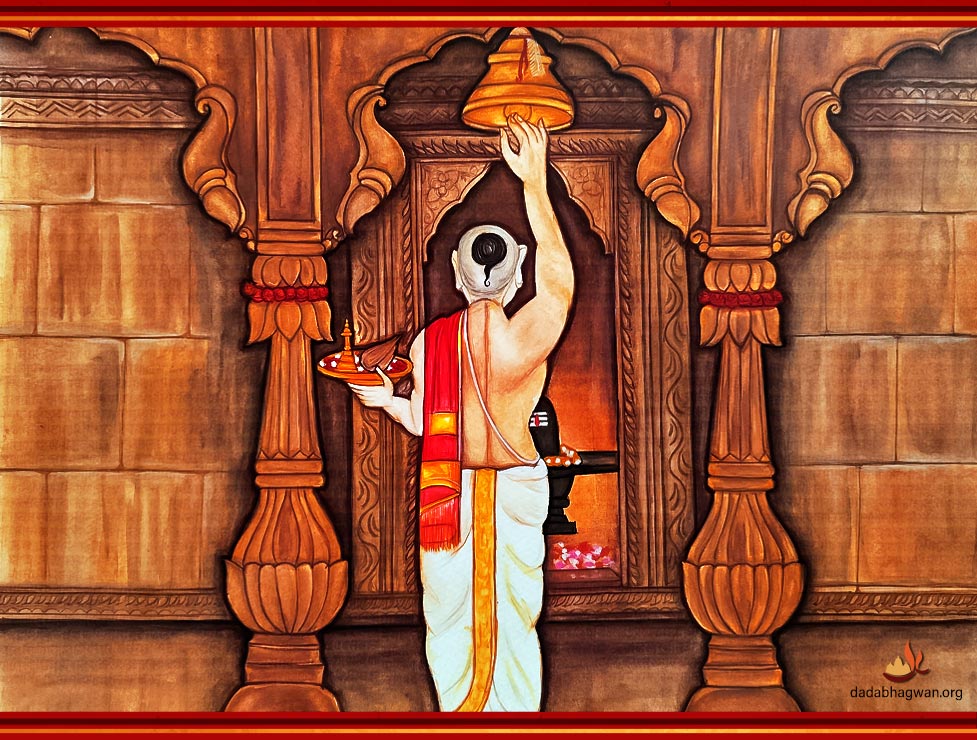
Sixteenth Birth - Vishwabhuti and Seventeenth Birth – Celestial World
After being born in the celestial realm, one of the later births of Mahaveer Swami was born as a prince in the city of Rajgrihi. King Vishwanandi had a son named Vishakhanandi and a nephew named Vishwabhuti (Lord Mahavir). The two grew up together like brothers, but there was no real affection between them. As they grew older, both became young men and learned all the skills. Among the two, Prince Vishakhanandi was somewhat weaker, while Vishwabhuti was strong and powerful. After they came of age, both got married. Once, it so happened that Vishwabhuti went to the grand and magnificent royal garden, along with all his queens. He loved this garden deeply and spent most of his time there. In their royal family, there was a strict rule that if one person was already in the garden, no one else was allowed to enter. Only after that person left could another enter. It was a matter of discipline and respect for boundaries.
While Vishwabhuti was inside the garden, at that very time Prince Vishakhanandi wished to enter it. He went there with his queens, but the gatekeeper stopped him, saying, “Vishwabhuti is inside. You cannot enter right now.” So, Vishakhanandi stood outside and waited for a long time for his turn, hoping to enter once the garden became free. Meanwhile, a maid of the queen mother came to the garden to pluck flowers. She noticed that the prince was standing outside, while the nephew was enjoying himself inside. Seeing this, she went back and instigated the queen mother by narrating this incident to her. The queen mother became upset and thought, “The royal throne rightfully belongs to my son, and yet he has to wait outside to enter the garden, while that nephew enjoys inside? How can this be acceptable!” In anger, she went to the kop bhavan (chamber of anger). The king tried to pacify and explain things to her, but she refused to listen. Her heart was filled with jealousy, thinking, “My son seems to have no importance, while the nephew is given so much respect! In truth, it is my son who is destined to sit on the throne.” Also, since Vishwabhuti was stronger and more capable than her son, the queen mother already felt a deep sense of envy toward him. At the request of the queen mother, the king devised a deceptive plan to bring Vishwabhuti out of the garden. As part of this plan, the king told him, “One of my tributary kings is not accepting my authority; I will have to go and fight him.” Hearing this, Vishwabhuti said, “You need not go; I will go myself.” When Vishwabhuti reached there, the king welcomed him with great respect and said, “Oh! How fortunate I am that you have come to my place!” Vishwabhuti then asked, “Why do you not accept our king’s authority?” The king replied, “No, no, I am his loyal tributary; I fully accept his authority.” Hearing this, Vishwabhuti was confused and could not understand what had happened, because one cannot wage war against someone who has already surrendered. Accepting the king’s hospitality, he returned. The tributary king then sent him off with many gifts and offerings.
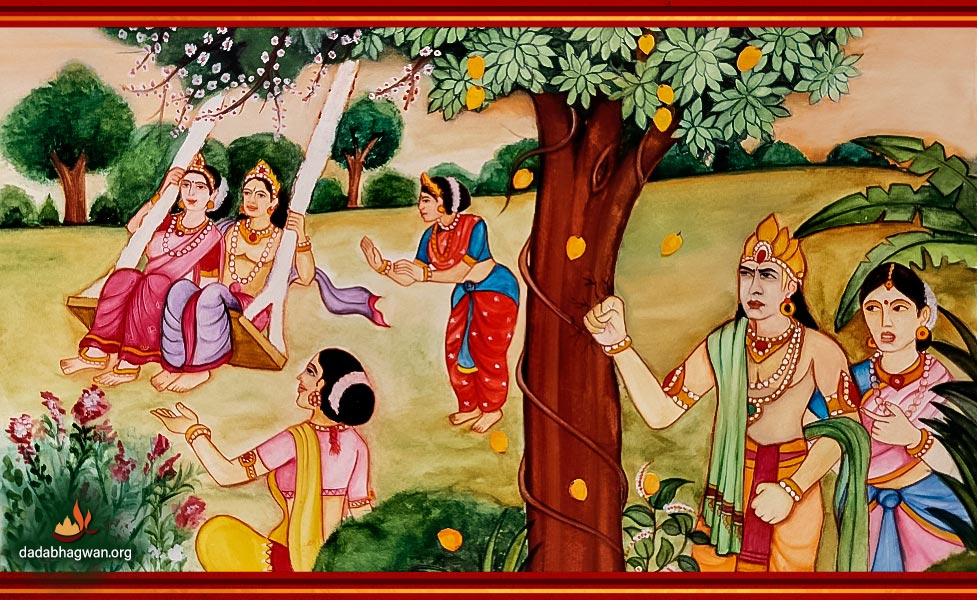
After completing the task entrusted to him, Vishwabhuti returned to his kingdom and narrated everything to the king. Having fulfilled his duty, he again went to the garden with his queens. But there, the gatekeeper stopped him, saying, “You cannot enter right now; your cousin, Crown Prince Vishakhanandi, is inside the garden with his queens.” At that moment, Vishwabhuti immediately understood that this had all been a deception to remove him from the garden. He became extremely angry. Nearby stood a wood-apple tree, which was heavily laden with fruits. In his anger, Vishwabhuti struck the tree with a single fist, and instantly all the fruits fell down at once. Everyone was stunned and frightened. In his fury, Vishwabhuti said to the soldiers, “I respect my uncle greatly; otherwise, right now I would have reduced all of you to the same state as these fruits.” Then, as intense anger arose within him, he suddenly realized the true nature of the world! “All this deceit and manipulation, for the sake of a kingdom! I do not want any of this. I never even desired it, so why all this trickery? Only for the throne!” With this realization, Vishwabhuti developed deep dispassion for worldly life and chose to renounce it. He took Diksha and left for the forest, where he engaged in intense penance, devotion, and spiritual practices. When he was leaving with this spirit of renunciation, his uncle and father earnestly pleaded with him, “Do not go; you should sit on the throne.” But with firm determination in his detachment, Vishwabhuti did not agree and proceeded with his renunciation. Eventually, as Vishakhanandi had desired, he attained the royal throne.
Once, Vishwabhuti, now a monk, went to a village for alms. By coincidence, it was the same village where his cousin Vishakhanandi’s wedding was taking place. Meanwhile, the king’s ministers noticed that Vishwabhuti’s body had become extremely thin and frail due to penances, yet they recognized him and informed Vishakhanandi. The moment Vishakhanandi saw the monk Vishwabhuti, his old enmity resurfaced intensely. Just then, a cow came and pushed Vishwabhuti, causing him to fall. Seeing this, Vishakhanandi, along with the soldiers and ministers, began mocking him. With deep hostility and sarcasm, Vishakhanandi taunted him, saying, “So, you were the one who could strike everyone down like those fruits from the wood-apple tree! Where has that strength gone now? A mere cow has knocked you down; where is your power now? Do you have anything left in you?”
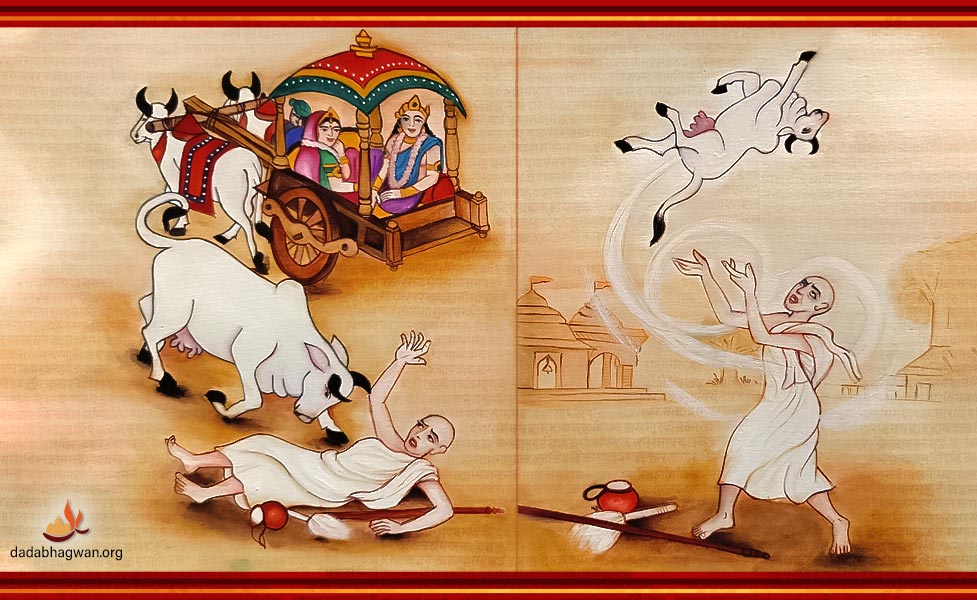
Hearing this, Vishwabhuti’s ego was deeply hurt, and in a single moment, he cast aside all his renunciation, restraint, and equanimity. In anger, he grabbed the cow by its horn and flung it forcefully to the ground, displaying his strength; consumed by rage, he eventually met his death in that very state. Such intense enmity arose within him toward his cousin Vishakhanandi that he resolved within himself, “I will kill him, if not in this life, then in the next. Let whatever penances I have performed bear fruit only for this resolve; in my next birth, I will surely kill Vishakhanandi.” In this way, Vishwabhuti, the monk, bound a firm inner resolution. With this, he lost all the merit of his penances. Therefore, one should never taunt anyone, and our conduct should be such that not even the slightest suffering is caused to any living being through us.
After exhausting the karma of his lifespan, Vishwabhuti was reborn in the celestial world. Meanwhile, Vishakhanandi, after completing his lifespan, was born as a Prativasudev (a rival of Vasudev, the one who has evolved from being an ordinary human into becoming God) named Ashvagriva, and Vishwabhuti, after completing his celestial lifespan, was born in the human realm as Tripushta Vasudev. Let us now continue reading about the remaining births of Lord Mahavir, starting from His birth as Tripushta Vasudev.
Related Topic
- Shree Mahavir Bhagwan: Past Lives Part-2 of the Twenty-fourth Tirthankara
- Shree Mahavir Bhagwan: Garbh Haran, Birth, and Diksha of the Twenty-fourth Tirthankara
- Shree Mahavir Bhagwan: Upsargas on the Twenty-fourth Tirthankara
- Shree Mahavir Bhagwan: Sacred Teachings to Chandkaushik Snake
- Shree Mahavir Bhagwan: Incidents with Goshala

subscribe your email for our latest news and events
Dada Bhagwan Foundation, Adalaj is a spiritual non-profit organization whose goal is to spread peace, harmony and everlasting bliss to the whole world through the spiritual science of Akram Vignan.
Ask a question and Get an assured response


