


Should we believe in Jyotish Shashtra? Is Astrology real?
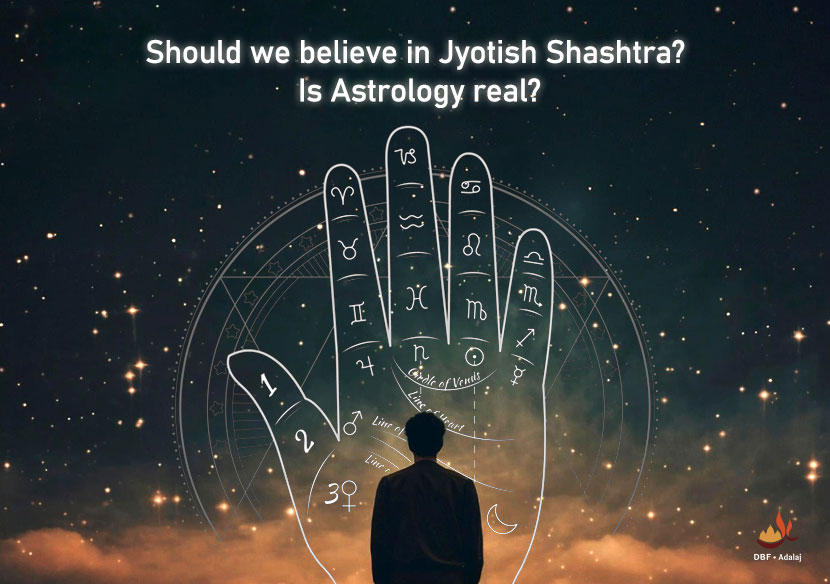
Across the world and especially in India, people often turn to astrology or jyotish shastra to resolve financial, family, or physical problems. In particular, for matters such as marriage, career, childbirth, and court cases, they tend to rely heavily on astrology. Astrologers examine planetary periods in the birth horoscope and suggest various remedies, such as mantras, recitations; wearing rings with gemstones or precious stones suited to specific planets; installing special yantras; and performing rituals to nullify the effects of inauspicious planetary combinations such as Kaal Sarp, Mangal, or the influence of Shani (Saturn), Rahu, and so on.
So, is astrology real? Astrology or jyotish shastra itself is true. However, when those who practice astrology turn it into a business and use the knowledge with the greed of earning money, it no longer remains reliable. Without deep study, this knowledge is sold openly in shops everywhere, which becomes a cause for increasing superstition among people. Jyotish shastra is based on the positions of the planets. But when astrologers declare, “These planets are troubling you,” people end up pouring money into rings, yantras, and rituals. By spending money on such things, people become financially and mentally distressed.
Belief versus Reality
In reality, the Sun, Moon, planets, and constellations are all celestial deities linked to astrological significance. The form is that of the planets, but within them resides divine consciousness. Why would they come to trouble us? Those who are worthy of worship, whom we bow to with reverence, why would they cause us suffering? The planets are actually vitaraag (absolutely free from all attachment and abhorrence); they have no enmity or hostility toward anyone that would make them cause harm. If we think logically, if planets were truly causing trouble to individuals, would they not bind karma for troubling all human beings across the world?

Some astrologers, to remedy grah dosh (planetary faults), have other Brahmins or chanters perform a mantra lakhs and lakhs of times, in repetition, on one’s behalf. Now, how can chanting done by a third person, after taking money, yield results for us? Now this is like someone else eating food and expecting our stomach to be filled. Who can know whether the person chanting sincerely completes one lakh repetitions or merely goes through the motions? When even sitting steadily for ten minutes is difficult, how easy can it be to complete a hundred thousand chants? Therefore, there is no need to get entangled in all this.
No matter how many horoscopes are matched before marriage, if conflict still arises after marriage, then what is the point of matching the horoscopes at all? It is also seen that husbands and wives whose horoscopes show a perfect match of all thirty-two points end up quarrelling thirty-two times a day. On the other hand, many people get married without matching horoscopes at all, and yet their married life runs smoothly. In short, it is not observed that everyone who marries at an astrologically chosen auspicious time remains happy forever. This is merely a belief. Except for India, such a belief of matching the horoscopes before marriage is not seen in other countries.
Astrologers themselves are often caught in the web of their own karmas. It is commonly seen that there are many difficulties in their own lives. If they truly had the ability to improve our lives, why are they unable to improve their own? For example, when we go to a doctor and there is no illness, the doctor sends us back saying, “You have no disease.” But when we go to an astrologer, do they ever say, “There is no defect in your planets; go and live peacefully”? Does this not show that it has become a business? If an astrologer himself experiences unrest in his own life, fights daily with his wife, how can he possibly open up our destiny? If we examine things in this way, the reality becomes clear. Running after astrologers and wearing rings does not truly bring peace into one’s life.
People in foreign countries largely do not believe in astrology, and yet they live happily. Even if they lose their jobs, they do not become overly distressed or anxious, and within a short time they often find another job as well. People who do not even know astrology still live peacefully. In contrast, in the villages of India, such superstition is spread very widely. For every type of so-called knowledge, a corresponding “expert” emerges, and uneducated, innocent people get entangled in all this and end up becoming even more distressed instead.
Karma cannot be changed
In reality, jyotish shastra only shows what kind of karmic results one is going to experience in this life. The results of this birth are determined based on the karmas bound in the previous life. Whatever causes were created in the past life, their results are experienced in this life. The results cannot be changed. For example, once we have appeared for an examination, the result comes after a few days. From the result itself, we clearly come to know how many marks we obtained and whether we passed or failed. Now, before the examination result is declared, does it really make any sense to go and ask how many marks we get? Relying on jyotish shastra is like going to ask what kind of result one is going to experience. Truly speaking, the result will definitely be according to the effort we put in and the way we wrote the exam. In the same way, in life too, we will inevitably receive results according to our karmas, there can be no change in that. Then what is the benefit of knowing it in advance? Instead, it is better to improve the next examination, to perform such karmas today that their results will be good.
Many times, we feel, “I made a good decision using my intellect.” But the intellect functions under the influence of demerit and merit karmas. When merit karma is in effect, all the decisions taken by a person turn out to be right, and when demerit karma is in effect, the very same person’s decisions turn out to be wrong. Thus, we receive results based solely on our own merit and demerit karmas. If demerit karma has been bound, its result will come and suffering will have to be endured. If merit karma has been bound, its result will come and we will have to experience that merit.
We all know that in the time of Bhagwan Shri Ram, highly learned astrologers and sages had predicted that, “Tomorrow morning, at an auspicious moment, Ramchandraji will be crowned king and will ascend the throne of Ayodhya.” But the very next day, Kaikeyi ended up changing the entire story! Let alone ascending the throne, Ramchandraji did not even get a hut to live in, instead, he was sent into exile in the forest for fourteen years. When even the predictions made by the most eminent astrologers of the Satyug (the first of the four eras of the time cycle, characterized by virtue, wisdom, happiness, and morality) turned out to be incorrect, then whom can one trust in the Kaliyug (an era of the time cycle characterized predominantly by misery, and almost no happiness)?
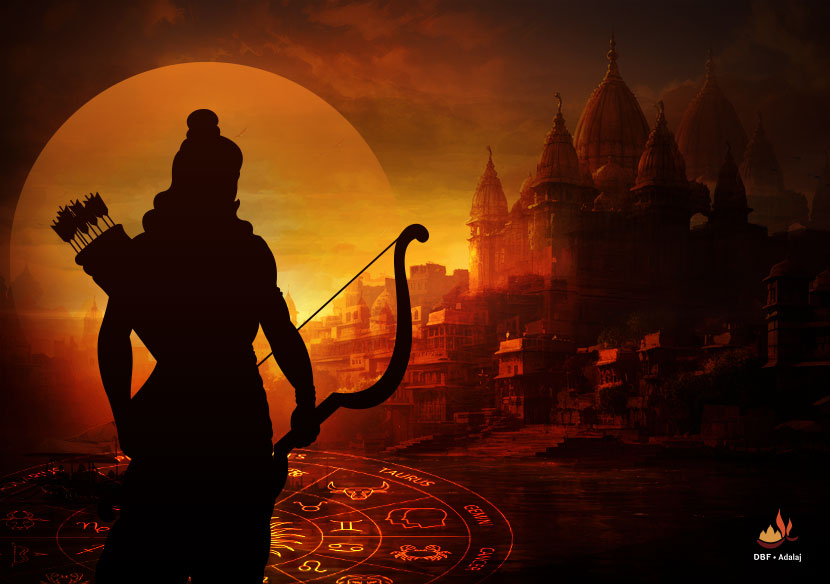
Even a supreme Vasudeva like Bhagwan Shri Krishna had many planets under His command. He was capable of bringing the planets themselves under control, and by doing so, he could even have prevented the destructive war of Mahabharata. Yet, even Bhagwan could not make any change. Bhagwan Shri Krishna himself met his end due to an arrow striking his foot. If even an all-powerful Bhagwan could not do anything against karma, then what capacity do ordinary human beings have? When the science of karma is so definite, it is worth reflecting on how wearing various costly gemstone rings, getting chants performed, or conducting rituals could possibly bring about any change in karma.
When the nirvana of Bhagwan Mahavir was approaching, the celestial beings, with the intention that suffering should not befall the world, requested Bhagwan, “Lord, please extend Your lifespan by sometime, so that the influence of the Bhasmak planet may be averted.” This was because it had been foretold that for two and a half thousand years after Bhagwan Mahavir’s nirvana, the adverse influence of the Bhasmak asterism would prevail. At that time, Bhagwan said that not even an amount equal to a single mustard seed could be increased or decreased in one’s lifespan. The Bhasmak asterism is merely an indicator of what is destined to occur. The planets do not create adverse effects; rather, during the fifth era, the unfavourable time-cycle itself will have adverse effects on human beings, and that cannot be stopped.
The true path to peace
Because human beings are unable to face the karmas that arise in life with courage, they take refuge in astrology to seek reassurance during times of suffering. However, knowing what will happen in the future does not truly remove suffering. Even after performing countless rituals or actions, the karmas that have come to fruition do not change. Therefore, instead of getting entangled in the confusion of such false beliefs, let us courageously face whatever comes to us according to our karmic account.
If we truly want peace in life, then we must search for the true path to peace. Whichever Bhagwan or chosen deity we believe in, we should pray to Them saying, “O God! Grant me the strength to free myself from the karmas that have come upon me, and to pass through them.” By going to the temple and praying to the Lord, or by reading religious scriptures, one can experience some peace. If we seek out a pure virtuous saint or a Gnani Purush (One who has realized the Self and is able to do the same for others), we can receive the right understanding to come out of karma. By doing this, the karma itself will not change, the karma will remain exactly as it is but we will gain the strength and courage to pass through it. As a result, what would have felt like a spear piercing us will feel no more painful than a prick of a needle.
Whatever result comes, there are causes behind it. If we make mistakes while writing an examination, we fail. In the same way, we should reflect that such circumstances have come to us as the result of certain karmas, and then work on correcting the causes we are creating now. When the right understanding is set, there will be no inner attachment, abhorrence, or worries, no matter what the circumstances may be. In reality, no external planets (grah) trouble us. Rather, it is our own inner “planets” that trouble us, such as insistence (agrah), conflict (vigrah), undue insistence (duragrah), insistence on one’s own version of truth (satyagrah), to attack others (abhigrah), possessiveness (parigraha), prejudice (purvagrah), insistence on a religious fallacy or misconception (mithyagrah), and stubborn insistence (hathagrah). Therefore, we should remain engaged in efforts to become free from these inner faults.
Many times, everyone in our family may believe in jyotish shastra, while we ourselves may not have faith in it. In such a situation, we should allow them to believe as they wish. At the same time, we should remain careful that doubts or counter-doubts do not arise within us, and that their beliefs do not disturb or shake us. If we have no involvement and it does not affect us in any way, then nothing will happen.

subscribe your email for our latest news and events
Dada Bhagwan Foundation, Adalaj is a spiritual non-profit organization whose goal is to spread peace, harmony and everlasting bliss to the whole world through the spiritual science of Akram Vignan.
Ask a question and Get an assured response


