Banner
  • question-circle
  • quote-line-wt

Non-violence (Ahimsa) and Spiritual Awareness

Ahimsa Parmodharm” (“Non -violence is the ultimate religion.”)

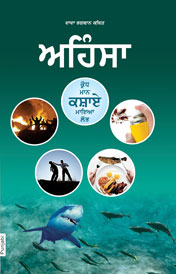
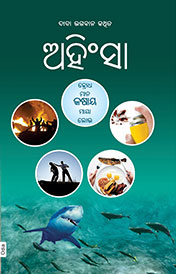
What is the measure of a true religion? It is how far the religion has progressed towards non-violence, also known as ahimsa. To kill any living being, or even to cause the slightest suffering, is all considered violence. When, through our mind, speech, or actions, no living being is hurt even to the slightest extent, that is called true non-violence!

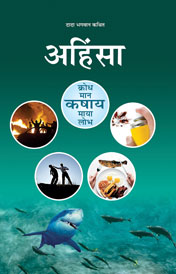
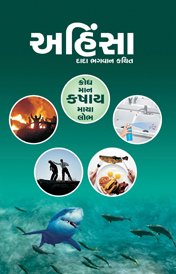
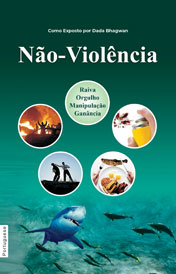
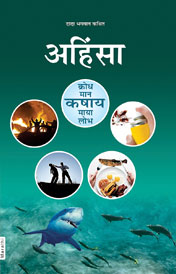
From killing small creatures like ants, mosquitoes, and flies to killing larger creatures like snakes and lizards; from hunting animals, offering animal sacrifices, slaughtering animals and birds for meat or eggs, to destroying insects in agriculture, all of these are forms of violence at the gross level. Among all of this, killing a human being or an abortion is considered severe violence. But when, driven by inner passions like anger, pride, deceit, or greed, we cause mental suffering to any living being that is subtle violence, which is in fact the gravest violence. There are many who understand and avoid gross violence, but understanding subtle violence is difficult.

The entire world is an ocean of living beings, from single-sensed to five-sensed creatures. Even in breathing, moving, and performing daily activities, violence is caused to jalkaya (one-sensed, non-mobile living beings whose body is in the form of water) vayukaya (one-sensed, non-mobile living beings whose body is in the form of air), and teukaya (one-sensed, non-mobile living beings whose body is in the form of fire). So, in this vast ocean of violence, how can one conduct oneself in a completely non-violent manner? As one understands questions such as, ‘What truly is non-violence? What are its benefits? In what different ways does violence occur? What are the dangers of violence? How can real non-violence be practiced?’ etc., then following it becomes easier. Ultimately, only when one becomes aware of one’s real Self and remains established in the Self, can one become completely non-violent.

Param Pujya Dada Bhagwan, who Himself has gone beyond violence and is established in a state of complete non-violence, explains to us the true nature of violence. Through Him, we gain an understanding of how it is possible to practice non-violence or ahimsa from gross (physical) to subtle levels.

Non-Violence

The simplest way of achieving peace and happiness in life is to heartily pray god every day, 'I don't want to hurt anybody in this world, by my mind, speech or action.'

play
previous
next

Top Questions & Answers

  1. Q. How to be Non-violent?

    A.   To be non-violent or to practice non-violence, one must first understand what violence actually... Read More

  2. Q. Why is there such a great emphasis on protecting life forms from fear?

    A. Explaining the principle of nature, Param Pujya Dada Bhagwan says, “You have the right to kill the... Read More

  3. Q. What is the importance of Non-violence?

    A. The importance of non violence extends beyond actions—it shapes our thoughts, words, actions and... Read More

  4. Q. How does animal violence and human killing occur?

    A.   A living being, which emerges from nigod (the lowest form of life which is not yet in worldly... Read More

  5. Q. Are humans supposed to eat meat?

    A. Param Pujya Dada Bhagwan explains that to practice non-violence, one must exercise great control... Read More

  6. Q. Is egg vegetarian or non-vegetarian?

    A. Generally, even people who do not eat meat do not feel there is any risk in eating eggs, as there... Read More

  7. Q. Why and how to stop violence caused by killing insect pests?

    A. Generally, when mosquitoes, flies, ants, bedbugs, cockroaches, or lizards are seen in the house, we... Read More

  8. Q. How to prevent violence of farm insects in agriculture?

    A. While carrying out farming activities, farmers have to commit the offense of violence of farm... Read More

  9. Q. Which is the biggest type of violence and how to get rid of it?

    A. Param Pujya Dada Bhagwan says that in this world, the gravest type of violence occurs through... Read More

Spiritual Quotes

  1. "Face all violence with non-violence." If someone uses the weapon of violence, you should use the 'weapon' of non-violence against him. Only this approach will lead to happiness. Violence only stops with non-violence.
  2. On the one hand people pray to the Lord while on the other, they continue to hurt the very beings within which the Lord resides. 
  3. To cause someone mental distress, to hurt him, cheat, betray or steal from him is all raudradhyan (adverse internal meditation that hurts others), the consequence of which will be a life in hell.
  4. Ahimsa means to not have a single negative thought about anyone, not even for one's own enemies. A non-violent person will even think about the physical well-being and salvation of his own enemy.
  5. Kashaya is the ultimate violence and that is why the Lord has said that first and foremost, one should not have any kashaya. This type of violence is called self-violence or intent-violence (bhaav-himsa).
  6. There is no greater violence than the kashaya done against other human beings. Show me anyone that does not do this. Those who do no kashaya at home practice true ahimsa.
  7. If a person were to resolve in his mind that under no circumstances does he want to kill any life-form, then he will not be instrumental in causing the death of any life-form.
  8. Protecting life from fear (Abhaydaan) is the highest charity of all.
  9. Only the one, who is absolutely non-violent himself, can show others the true nature of violence. Such a being is eternally established as the Self. These are the Tirthankaras and the Gnanis.
  10. If we have a higher degree of Non-violence within us, a lion will forget its violent intent towards us.
  11. What do the vitaraag (absolutely detached) Lords say? If ahimsa (the practice of non-violence through the mind, speech and body) is maintained in the midst of himsa (violence), then happiness will ensue. Violence can never come to an end by fighting it with violence. Violence will come to an end by practising non-violence against it.
  12. There is nothing more powerful than non-violence (ahinsa) and nothing weaker than violence (hinsa). Who is weak in this world? One who is egoistic. Who is powerful in this world? One who is non-egoistic.
  13. Whom will you commit violence against? The Supreme Lord resides in every living being, so whom will you hurt?
  14. The greatest violence (hinsa) in this world is that of anger-pride-deceit-greed (kashays – the ones that gives pain to soul).
  15. What is the violent intent (bhaav-hinsa)? Violence (hinsa) against your real Self through anger-pride-deceit-greed; meaning anger-pride-deceit-greed that causes bondage to your Self, therefore first have pity on your self. First you need non-violent intent (bhaav-ahinsa) for your own Self and then for others.
  16. To protect one’s own statement is the greatest form of violence. To impress upon others that one's own statement is correct is a form of violence itself.
  17. The enlightened ones (Vitraag Lords) tells us to use the weapon of non-violence (ahinsa) against violence (hinsa). Violence cannot be conquered with violence. It can only be conquered with non-violence.
  18. Ahimsa (the practice of non-violence) is a very exalted thing. There is no abrahmacharya (indulgence in sexual activity) in ahimsa. There is no parigrah (a sense of possessivessness and inner attachment towards things and people) in ahimsa. There is no asatya (falsehood; lying) in ahimsa. Neither is there any chori (stealing; covetousness) in ahimsa.
  19. Non-violence is called that when despite having the full power if someone does something to him, he does not do anything to that person.
  20. Absolute Knowledge (Kevalgnan) can never be attained without the domain of non-violence (ahinsa). Full awareness will not be attained without non-violence (ahinsa).
  21. One will not bleed at all if hit by an arrow shot by someone with a non-violent intent (ahinsak bhaav) but a flower thrown by someone with a violent intent (hinsak bhaav) will make him bleed. Neither the arrow or the flower are not as effective as the violent intent are.
  22. Himsak bhaav refers to the slightest of intent of violence against anyone, then be it the intent of causing anyone a loss or harming anyone, the intent of becoming angry at anyone, the intent of hurting anyone, the intent of inflicting suffering on anyone. These intents should leave first.

Related Books

×
Share on