


What are some common examples of superstitions and are they true?
Goddess Possession
One of the most widespread examples of superstitions in villages of India is goddess possession. People believe that Goddess enters the body of a person, especially a woman, and then that person begins to go into a trance. While in this state, whatever the person speaks, is believed to be spoken by Goddess herself, and is considered to be true. Particularly during the time of Navratri, Goddess possession begins to be seen everywhere, house to house and lane to lane. Villagers then rush saying, “Goddess has come, Goddess has come,” and they bow down fully in reverence. The women leave their hair loose, shake violently in a frightening manner, and at intervals drink entire pots of water. At times, it is even seen that vermilion (kumkum) appears to flow from the person who is in the trance. Seeing all this, simple and innocent people become awestruck.
If we examine closely, we shall find that the very woman whom people were bowing to as Goddess, goes home afterwards and quarrels with her husband, her mother-in-law, and her sister-in-law. If virtuous and pure celestial deities like Mataji (Goddess) were to descend, would They not choose a worthy being? Would Mataji not manifest in those devotees who wake up in the early morning hours and engage in heartfelt devotion and spiritual practice for hours every day? Would She not shower vermilion upon them? Why would Mataji enter the body of a person who is constantly quarrelling and then shower vermilion upon her? Therefore, in reality, all this does not truly happen. In most cases, even the vermilion appears due to sleight of hand. If an intelligent person investigates, it becomes evident that the individual has hidden small packets of vermilion within her clothing.
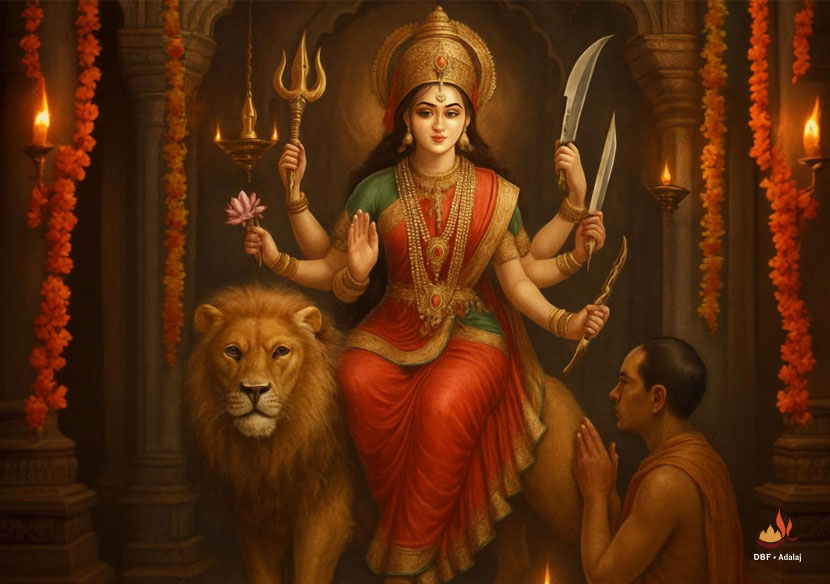
In reality, Amba Maa, Padmavati Maa, Durga Maa, Mahakali Maa, all are deities of a very high order. Only when there is extraordinary purity, when immense work has been done for the welfare of others, and when tremendous punya (merit karma) has been accumulated, does one take birth as such a high-order celestial deity. Millions and crores of people worship Them. Such exalted deities do not descend to this earth to answer ordinary personal questions like, “Mataji, my buffalo has gone missing, will it return?” or “My husband is involved with another woman, will he reform or not?” They do not come for such matters. High-order deities always remain in the service of the fully vitaraag (One who is absolutely free from all attachment) Bhagwan. They do not descend in a gross, physical form into this turbulent kaliyug, this realm of death. Mataji’s grace is especially upon those whose sole aspiration is to progress on the path of moksha (liberation). Upon such seekers, Her grace flows abundantly, and that grace is subtle in nature. She provides great assistance in removing obstacles on the path to moksha.
Therefore, all the talk about Mataji “coming,” going into a trance, and saying this or that is either deliberate fabrication or the result of psychological effects. In reality, Mataji does not come. The person who goes into such trances does so either to deceive people or because they themselves are swept up in psychological influence. At the same time, the people around them, also get carried away by these beliefs driven by the hope of gaining some benefit from Mataji.
Beings of the kaliyug have lost the strength to endure the rise of adverse karmas. When the blows of karma come, they become so overwhelmed that they lose inner stability. Then, in the hope that “Mataji will do something good for me,” they seek reassurance and get swept away in such inverted superstitions. On the other hand, those who have the understanding that, “Whatever karma comes, I have to pass through it and complete it,” do not even entertain the idea of making changes to it, and therefore do not get carried away by such superstitions.
If one wishes to worship Mataji, it should not be done through superstition, but through right understanding. Mataji is referred to as aadhya shakti; She is a prakrutik shakti (energy of the non-Self). Through devotion to Her, our prakruti (the relative self with inherent characteristic traits) becomes balanced and natural, and we gain the strength to fight through even the most difficult karmas. Instead of asking Her for worldly things, we should ask for the strength and courage to pass through our karmas. Because there is no escape from experiencing the results of the karmas that we have bound.
Black Magic
Nowadays, one of the common examples of superstitions is black magic, which is seen among all kinds of people, educated as well as uneducated. People believe that someone who is jealous of them or harbours enmity toward them can perform black magic, witchcraft, or other occult practices against them. It is believed that through black magic one can cause harm to others, such as illness, loss in business, disturbance in married life, etc. As a result, when such difficulties arise, people assume that black magic has been done on them and go to tantriks and godmen for remedies, wasting large amounts of money. Moreover, when suspicion falls upon someone within the household that this person is practicing black magic against them, then there comes no end to such delusions. Because of such baseless superstitions, relationships deteriorate, and attachment-abhorrence, hatred, and hostility toward one another increase.
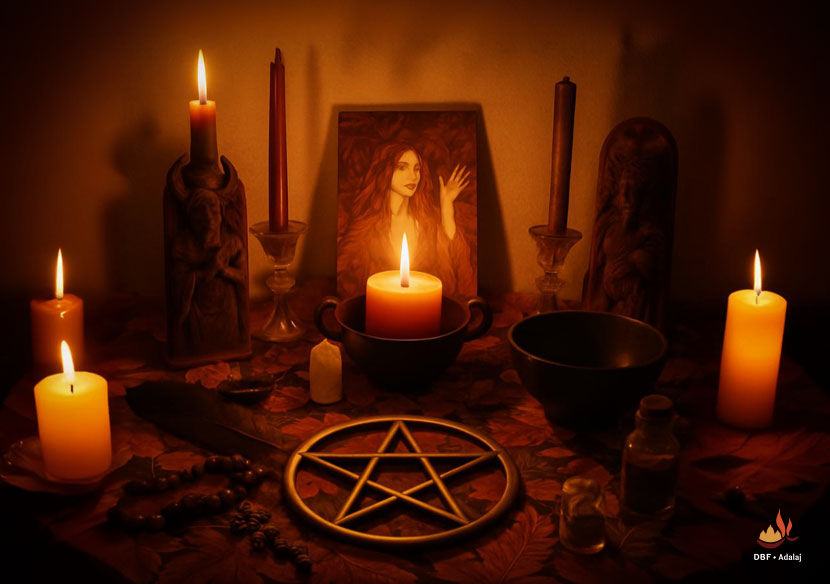
Black magic is indeed a kind of practice, but it does not affect everyone. It affects only those who are weak-minded and who live in fear, thinking, “Something will happen to me.” But those who are mentally strong cannot be affected by it at all. Out of lakhs of cases, only one or two may be genuine; the rest are largely psychological effects. Such effects are experienced only by people who are mentally weak and who have ongoing enmity or animosity with others. When they keep thinking, “What if something is done to me?” or “What if something happens to me?”, then the effect manifests. That very belief makes a person increasingly miserable and can ultimately drive them insane. If we do not get entangled in it, no one can trouble us. If we maintain a firm mindset that “Let them do whatever rituals they want, tie whatever threads they want, or hang lemons and chillies if they wish; nothing is going to happen to me”, then the black magic directed outward rebounds back onto the doer. If we maintain faith in God, engage in Their devotion, and receive right understanding from saints or a Gnani Purush (One who has realized the Self and is able to do the same for others), then black magic cannot affect us in any way at all.
If our leg is hurting and we start suspecting that someone in the household has done something to cause it, then we keep performing rituals or visiting tantriks to have grains thrown over us, and half our life gets spent in that. Yet the pain in the leg does not go away. In reality, the leg may be hurting due to consuming acidic food, and when, by coincidence, the consumption of such foods is stopped, the pain reduces. But the superstition takes hold that the pain reduced because of tying lemons or throwing grains, and crowds at the tantriks begin to grow. Moreover, it results into increased hostility and bitterness toward others. Then, in the name of taking revenge, we ourselves start taking the wrong paths. There is no end to all of this. Instead, if we go to a doctor and seek the advice of a mental health professional, we can become free from both the illness and the superstition.
Some people even issue threats, saying, “I will get you through black magic.” Then, if the other person does actually face a difficulty, a belief takes hold in them that, “They must have done black magic on me.” The principle says that without our own account, no one can harm us in any way. If even a mosquito cannot bite us without a karmic account, then how could black magic possibly affect us? When this right understanding prevails, fear does not remain. A person who threatens, “I will perform black magic on you,” cannot actually do anything at all. The more frightened we become, the more such a person becomes vocal and the more they threaten; but if we are not afraid, the other person naturally falls silent on their own.
If we have bound karmas, then their results will come to us alone. Those results may come through any nimit (an apparent doer who is simply instrumental in the unfolding of karma), but the nimit is not at fault. Lord Mahavir had nails driven into his ears, and Lord Shri Krishna was struck by an arrow in the foot, yet They remained in equanimity, understanding that it was the account of Their own karmas. Through this, They became free from karma and even attained liberation. If we maintain the understanding that “I alone have to experience the accounts of my karmas, I have to complete these accounts, and I must not bind new ones by harbouring attachment or abhorrence towards anyone,” then karmas get completed with equanimity. Karmas that feel as heavy as a mountain become as light as a stone. Even so, if there has been attachment, abhorrence, dislike, or contempt toward any person, we should ask for forgiveness from them within our heart, so that we can be released from those karmic accounts.
Ghosts, Spirits, and Godmen
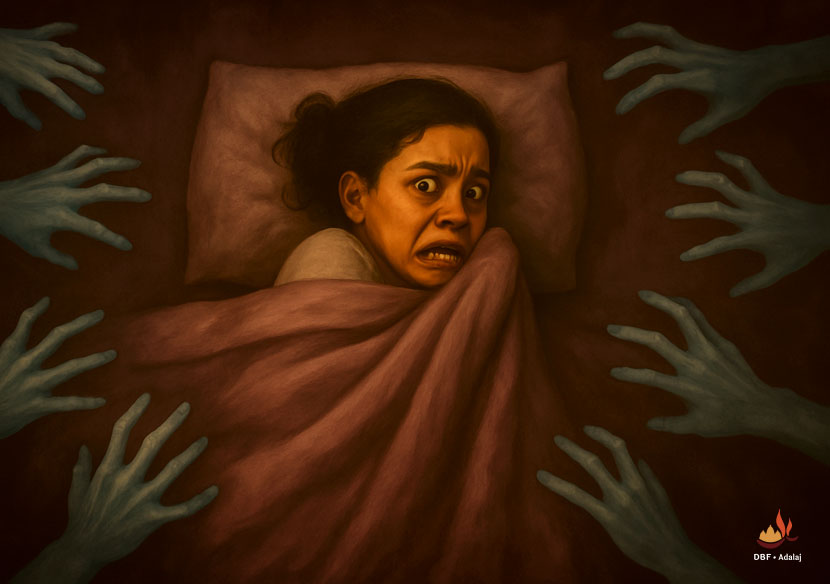
One of the most fearful examples of superstitions is the belief in possession by ghosts and spirits. To remove such possession, people turn to tantriks and so-called exorcists. In reality, ghosts are Vyantar devs (aerial spirits). They do not trouble human beings without reason; on the contrary, they often help them. Prets and pishachs (types of spirits) are avgatiya beings. An avgatiya being is one who, after death, does not immediately receive another body and therefore has to remain without a body for some years. At the time of death, when the Soul leaves one body, it normally acquires another body at the moment when the sperm and ovum unite in the womb. However, many times, if some unfulfilled desire remains at the time of death, that opportunity is missed, and the Soul has to wander without a body. Moreover, such wandering does not last for more than ten to twelve years. An avgatiya being does not have a gross physical body, but a subtle body. Therefore, it cannot eat or drink in the usual way. When hunger arises, it may enter the body of a person with whom it has an unresolved karmic account and consume food through that body. At times, it may be seen that large quantities of food, fifty laddoos or puris and other items at a time, and the vitality is drained. People refer to this as possession. However, such incidents occur only in one out of one lakhs of cases. Only if there is an account of attachment or abhorrence do beings of the spirit realm have the capacity to give us pleasure or pain. The true path is that for any living being with whom we may have had attachment or abhorrence, we should sincerely take repentance and ask for forgiveness from the heart, so that we can be freed from vengeance.
In most cases where it is believed that a person has been possessed by a spirit, there is actually a mental illness or a psychological condition. Instead of taking such a person to a psychiatrist, people take them to an exorcist. There, the person is beaten, subjected to burning, and made to endure severe physical and mental torture. Yet no improvement occurs; on the contrary, the person’s condition worsens. Many such mental patients recover after receiving proper treatment from a psychiatrist. This itself shows that all these are merely illusory examples of superstitions.

subscribe your email for our latest news and events
Dada Bhagwan Foundation, Adalaj is a spiritual non-profit organization whose goal is to spread peace, harmony and everlasting bliss to the whole world through the spiritual science of Akram Vignan.
Ask a question and Get an assured response


