


There is certainly a vast difference between spirituality and religion.
Come, let us attempt to analyse that difference.
In the quest for peace and happiness, one begins to practice religion.
Every religion in its own way, imparts the knowledge of what is good and what is bad. Religion is a faith or a belief system. It teaches us to leave bad things and adopt the good things instead, since the law of nature is such that when one does bad deeds, he charges demerit karma which brings him unhappiness; whereas if he does good deeds, he charges merit karma that yields him happiness.
There are various different religions practiced in the world eg. Hindu religion, Muslim religion, Christianity etc. Depending upon one’s spiritual development, everyone finds an appropriate religion for himself – one that he feels matches his viewpoint, that what he accepts as being correct and thereby gets entrenched in it.
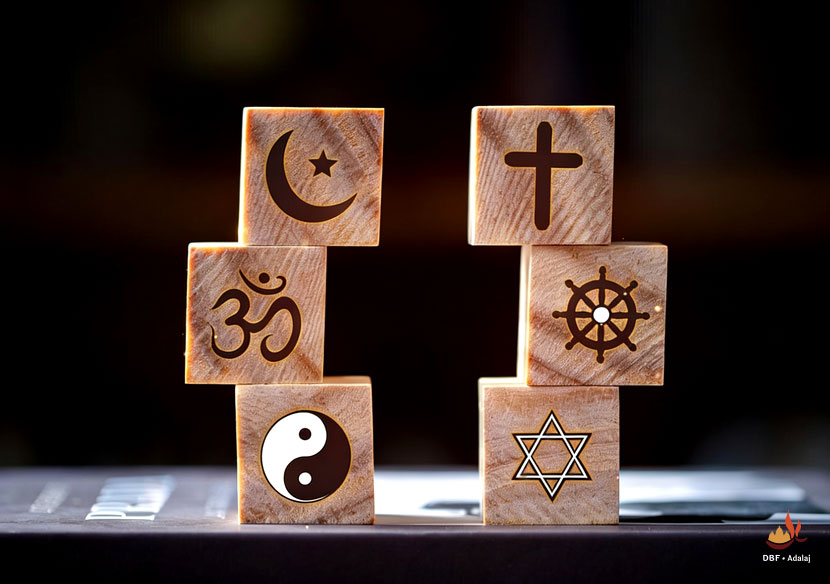
- Religion is all about doing something - You have to worship God, you have to keep chanting Lord’s name, you have to perform rituals, you have to say prayers, you have to do repentance, you have to do meditation, you have to renounce wife and children, house and property, money and all belongings, and you have to do lots of penance too. Principally, there is always a lot of burden and stress associated with any act of doing.
- For whatever reason when one fails to do whatever he intends to, there is lot of fear and panic too that will instantly and naturally arise within him, making him very restless.
- By doing good deeds, no doubt one binds merit karmas. But in order to enjoy the fruits of these merit karmas, one will have to take rebirth and come into this world again. The cycle of birth and death is far too painful and one has to undergo this misery to enjoy the fruits of his merit karmas.
- Moreover, the fruits of merit karmas are generally in the form of worldly happiness, which by its nature is temporary. Temporary happiness brings immense suffering when the time for that happiness comes to an end.
- And even while one is experiencing such happiness, he does feel satisfied for a while; but there after he gets saturated and moves on to find some other source of happiness. This cycle goes on and on for countless lives.
That is when the spiritual quest for permanent happiness arises within...
One realizes that Lord Mahavir, Lord Ram, Lord Krishna or whichever Gods he is presently worshipping – they achieved something beyond the intellect, beyond the ego, beyond what the worldly people have a reach to; they achieved something that kept them always happy no matter whatever the outer circumstances be; and that is why we worship them as God.
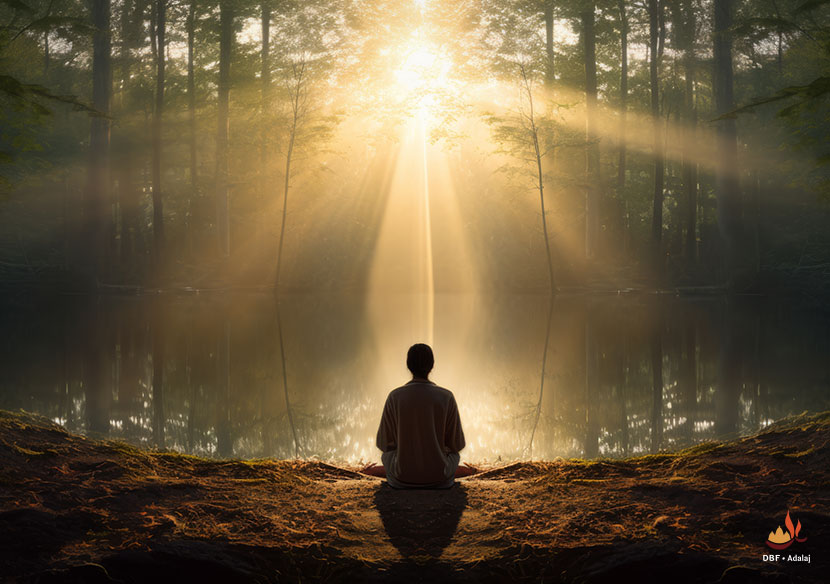
Birth after birth, as one is naturally progressing in his journey of spiritual development, finally through his experiences, there comes to him a realization that ‘all the worldly things are temporary and the happiness from the worldly things is also temporary’. This realization kindles within him the spiritual quest for permanent happiness. At this point, he aspires to reach, to follow and finally merge with God; he wants to be one with Him. But how, that he does not know.
Hence the hunt begins, “From where will I get permanent happiness?”
Nature ends his hunt one day, by offering him the circumstance that brings him in front of the Gnani, the Enlightened One.
The Gnani helps him realize that all along, while practicing religion he always thought, believed and said, “I am practicing religion, I am worshipping, I am doing meditation.” But “Who is this I?”
It is not the real I. Then “Who am I?”
And that marks the beginning of spirituality.
Spirituality means the knowledge to achieve realization of the Self, the realization of ‘Who am I?’
There is a huge difference between religion and spirituality. Religion gives us the knowledge that helps us differentiate between the good and bad; and makes us leave the bad and adopt the good. Whereas in spirituality, there is no need to leave anything nor adopt anything. Spirituality liberates us by teaching us to go beyond the duality, beyond the differentiation and discrimination of good and bad, and experience ‘Who really am I?’ and ‘Who is really the doer of the good and bad things?’
Let’s see how?
Just as dirty sewage water can be purified with great effort using various treatment methods, but it still cannot yield hydrogen or oxygen directly. Now, moving from bad to good is what is called progressing from adharma (irreligion) to dharma (religion). However, no matter how much dharma one attains, entering into adhyatma (spirituality) still remains; attaining the ultimate Element (the Self) still remains. Spirituality means turning toward the Soul, and ultimately, when one attains the Self and reaches the state of keval Gnan (absolute Knowledge), only then can the ultimate principle be said to be fulfilled.
Now, if a scientist conducts an experiment on sewage water to separate hydrogen and oxygen, would the oxygen or hydrogen be dirty, or would they be pure? They would certainly be pure. Similarly, whether people are considered pure or impure from a worldly perspective, the Soul Element within everyone is absolutely pure. But only a living, experientially Enlightened One (Gnani Purush) who knows this can enable one to attain it. A Gnani Purush, who has known the Soul completely in terms of its dravya (substance of an element), guna (characteristic; virtue), and paryay (phases), who is constantly experiencing it, and who possesses the ability to help others attain it, can grant Self-Realization through Bhed Vignyan (Science that separates the Self from the non-Self).
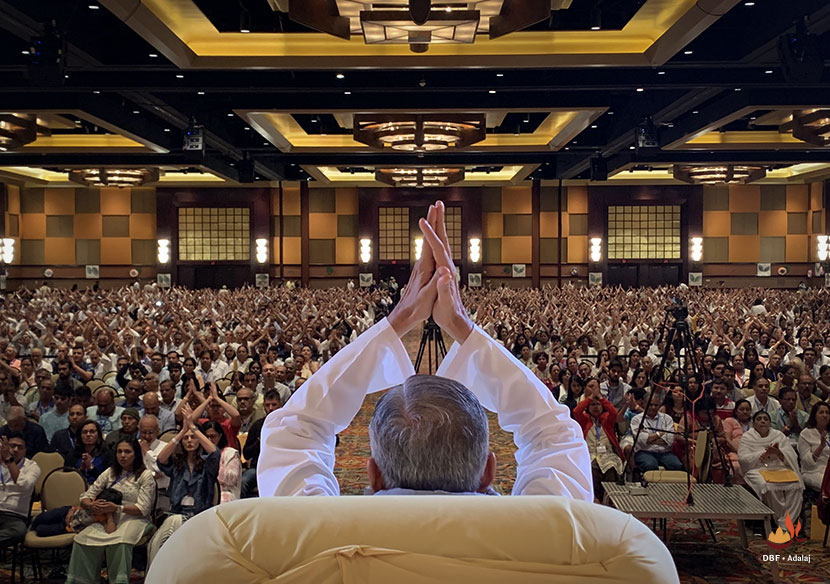
Gnan Vidhi is a scientific spiritual process for attaining Self-realization through Akram Vignan. By the grace of the Gnani Purush, a spiritual seeker attains the experience of their own Self, meaning the realization of the Soul, in just two hours.


