


Shree Neminath Bhagwan: Life Stories of the Twenty-second Tirthankara
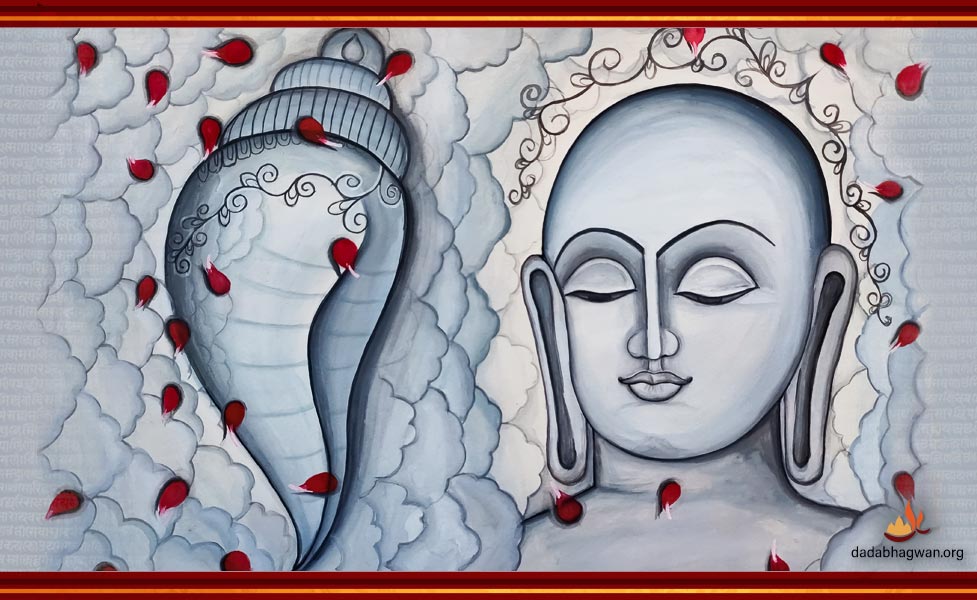
Shree Neminath Bhagwan was the 22nd Tirthankara of the present time cycle. His body complexion was black and his height was 10 bows. Neminath Bhagwan’s symbol (laanchhan) is conch (shankh). Gomedh Yaksh Dev and Ambika Devi are the Lord’s Shaasan Dev and Shaashan Devi, respectively.
Nem-Rajul’s karmic connection of eight lifetimes
Lord Neminath Bhagwan was engaged to Princess Rajul in His final lifetime. For the past eight lifetimes, He and Rajul had remained together as husband and wife in every single lifetime. Ordinarily, it is simply not possible for a husband and wife to be born together for eight consecutive lifetimes. If the husband does not see even a single negative in his wife, and the wife does not see even a single negative in the husband, and if they harbour the intent, ‘May I meet the same person again in the next lifetime,’ then they reunite in the next life; otherwise, it is simply not possible. At most, they might reunite for one lifetime. However, their remaining together for nine successive lifetimes is an unprecedented event in spiritual history. The birth of a human being occurs according to their karma. Neminath Bhagwan and Rajul had never seen a single fault of each other throughout their past lifetimes; their love was the same throughout, and hence, they remained together as husband and wife for eight lifetimes.
The introduction to the Yadav clan
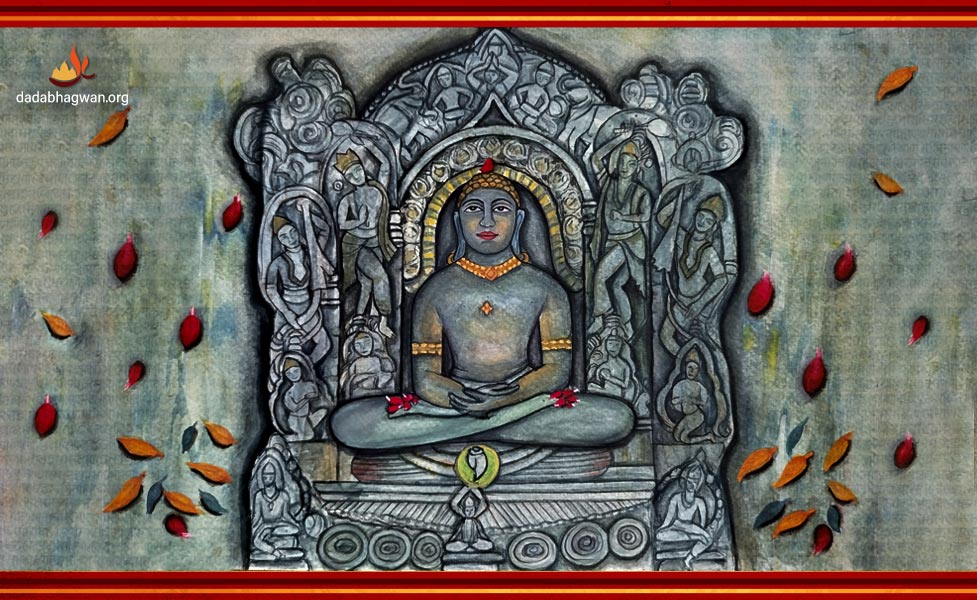
Neminath Bhagwan was the son of the Yadav clan’s King Samudravijay. King Samudravijay was the eldest of the 10 brothers, and King Vasudev, who was the father of Lord Krishna, was the youngest brother. Their family was dark complexioned. Shree Krishna Vasudev and Neminath Bhagwan were paternal cousins, and both were dark complexioned. Even today, wherever we do the darshan of Neminath Bhagwan’s idol, all of His idols are dark complexioned.
Immense non-violence right from birth
Neminath Bhagwan's greatest distinguishing quality was that right from birth, He was profoundly devoted to ahimsa (non-violence). Ahimsa dharma was naturally present in Him right from birth. He was extremely aware regarding non-violence. His feelings of pity and compassion were unparalleled. Since Neminath Bhagwan was the prince of a king, whenever a war occurred in the Yadav clan, He also had to join the battle along with everyone else. Despite having been born as a Tirthankara, He participated in war in a non-violent manner. Because the Lord Himself was a Tirthankara, His strength was many times greater than that of a Chakravarti king. All of His strength was dedicated to the attainment of the Self and to conquer the kashays (inner enemies of anger, pride, deceit and greed), not to conquer enemies. By conquering His own kashays of anger, pride, deceit and greed, He became invincible. When one is freed from all kashays, only then is one called a Tirthankara; only then does one attain Keval Gnan (absolute Knowledge) and is considered worthy of going to Moksha (the state of ultimate liberation).
Ahimsa became the evidentiary instrument for supreme dispassion
The ones who shared love for the past eight lifetimes, the same Nemikumar and Rajul, reunited again in the ninth incarnation. But before their relationship could culminate in marriage, an incident leading to dispassion occurred.
When Lord Neminath reached a marriageable age, upon the advice of Lord Krishna and other elders, His marriage was arranged with Princess Rajimati, the daughter of King Ugrasen. Princess Rajimati was the younger sister of Queen Satyabhama, the principal queen of Lord Krishna. On the day of the wedding, as Nemi Kumar’s wedding procession was on its way, His heart trembled upon hearing the terrified cries and wails of innocent animals quivering in fear along the route. Realizing that the cause of their fear was His own wedding celebration, He was filled with deep dispassion, found the worldly life cruel, turned back His wedding chariot, and took Diksha.
As Nemi Kumar's chariot turned back, Princess Rajimati was overwhelmed with great sorrow. Since she was a Kshatriyani (a woman of the warrior caste), she had already accepted Nemi Kumar as her husband in her heart. Her grief and tears continued for months, as the cause of her pain was the karmic bond she had shared with Him over the past eight lives. Rajimati too followed the path of Lord Neminath and accepted Diksha from Him. Thus, the very relationship that had once begun their worldly journey became, in this life, a supreme evidence for dispassion and liberation.
Shaasan Devi Goddess Ambika
Goddess Ambika is the Shaasan Devi of Lord Neminath. Goddess Ambika is revered and accepted in all religions. In reality, deities represent the prakruti (non-Self complex), while the Soul symbolizes the true Self, the Purush. The distinction between Purush and prakruti is realized, and naturally harmonizing prakruti while remaining in the state of Purush is the essence of devotion to the Goddess. For this, devotion to the Goddess is very helpful.
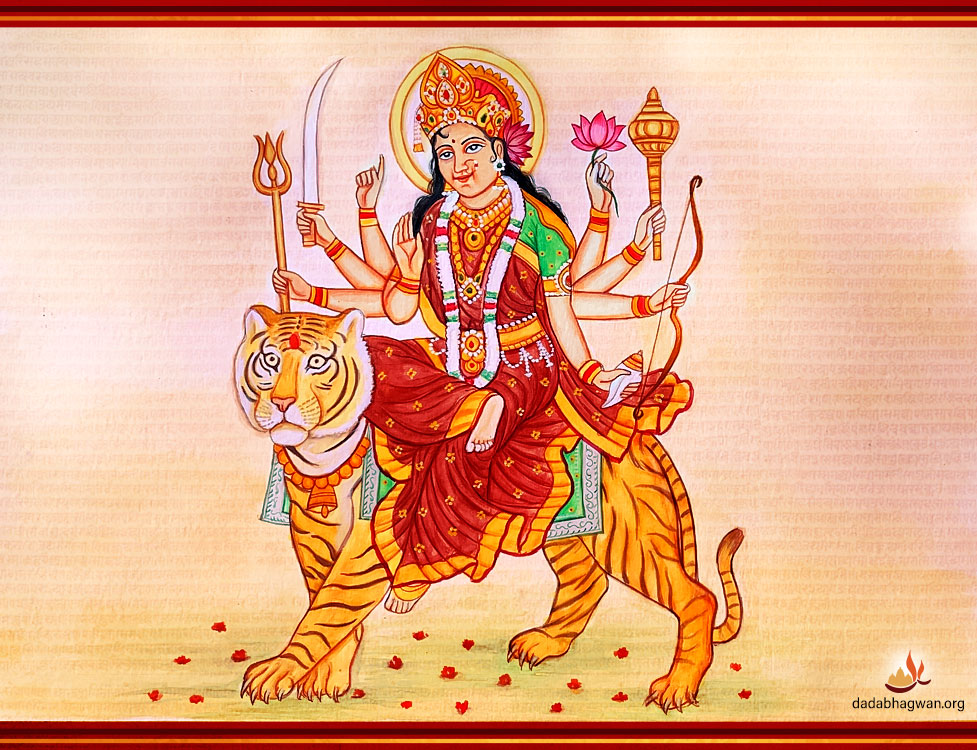
Nowadays, instead of regarding the Shaasan Dev-Devis in their true sense, people worship them merely to fulfil material desires and place conditions on them.
These high-stage deities are enlightened beings, all destined for Moksha. At present, they help us only on the path of liberation; they do not assist in worldly matters. Their true function is precisely to help us rise above worldly matters! Presiding deities continuously strive day and night to protect the spiritual reign, uphold its influence, guide people toward liberation, and help them understand the words of Gnanis (the enlightened One who can enlighten others) and Tirthankaras; not for our worldly gain. They are not meant to be bound to fulfil our worldly desires. Apart from liberation, we should not ask anything from the deities; for the sake of liberation, we should pray to them, saying, “Please remain pleased, we desire nothing from you. Bless us with your grace.” When the Shaasan Dev-Devis are pleased, what more could one need! If one must ask, it should be for something that never needs to be asked for again. If our purity is there, the deities will grant us everything. Our intention should be pure. Our lives should be dedicated to others. Therefore, worship of the deities should not be for material things, but performed with understanding.
An astonishing meeting of the two Vasudevas
In the time of Lord Neminath Bhagwan, an extraordinary event occurred with Vasudev Shri Krishna.
Lord Krishna was the paternal cousin of Tirthankara Lord Neminath and the ninth Vasudev. Being a Vasudev, that is, the ruler of half the Earth, He was immensely powerful. In the Jain scriptures, one of the ten great wonders is attributed to Lord Krishna, which occurred during the time of Lord Neminath.
Once, due to past enmity, Draupadi was abducted. The deity took her to the Bharat Kshetra of Ghatki Khanda. It was physically impossible to enter that region, but due to His Vasudev status, Shree Krishna Vasudev was able to go there, bring Draupadi back to Bharat Kshetra, and have a dialogue with Kapil Vasudev of Ghatki Khanda through the sound of conch shells.
According to the rules, two Vasudevas never meet at the same time in the same region, but during the time of Shri Neminath Bhagwan, this did occur, and it is considered a wonder in the spiritual world.
Liberation of Gajasu Kumar
Muni Gajasu Kumar lived during the era of Lord Neminath, and an extraordinary event related to his attainment of Keval Gnan took place. Gajasu Kumar was the younger brother of Shree Krishna Vasudev. From birth itself, Gajasu Kumar was detached from worldly life, but due to pressure from his mother and brother, he was married to Soma, the daughter of the Brahmin Somadatta. But soon after, Gajasu Kumar accepted Diksha from Lord Neminath.
After taking initiation, while he was deeply absorbed in meditation of the Self, his father-in-law happened to see him unexpectedly. Consumed by anger over Gajasu Kumar having renounced worldly life and leaving his daughter after marriage, he was overcome with intense hatred. In a fit of rage, he made a clay bund on Gajasu Kumar’s head and filled it with burning embers. On the other hand, Gajasu Kumar, being in the state of Muni, saw his father-in-law as flawless and regarded him as a great benefactor on his path to liberation. Even amidst such externally induced afflictions, he remained deeply absorbed in meditation of the Self, inwardly worshipping the virtues of the Soul and ascending the successive stages of the path to liberation. Ultimately, he realized the avyabadh (to not hurt nor be hurt) nature of the Soul, and as a result, attained Keval Gnan and achieved Moksha.
The Gnanis and the Tirthankaras, while living amidst worldly affairs, material pleasures, and even adverse circumstances, remain beyond the state of equanimity, ever absorbed in the awareness of the Self and thus complete their path to Moksha.
Let us now read further about the karmic bond spanning eight lifetimes between the twenty-second Tirthankara, Lord Neminath, and Rajimati.

subscribe your email for our latest news and events
Dada Bhagwan Foundation, Adalaj is a spiritual non-profit organization whose goal is to spread peace, harmony and everlasting bliss to the whole world through the spiritual science of Akram Vignan.
Ask a question and Get an assured response


