


Is pitru dosh real?
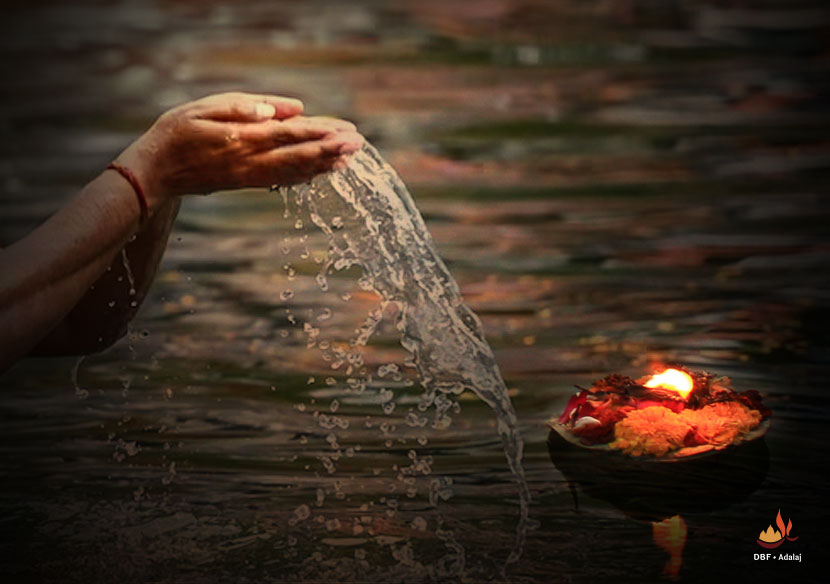
In India, whenever people face suffering or difficulties in life, they go to astrologers, bhuvas, and tantriks. They are told that the cause of their problems is pitru dosh, i.e., that their ancestors are displeased with them and are troubling them. Then, rituals such as pind-daan are arranged through Brahmins to pacify the ancestors, with the belief that this will liberate the ancestors and remove one’s own suffering. In addition to this, a shraadh ritual is performed once a year for the satisfaction of the ancestors. It is said that the ancestors come in the form of crows, and that by feeding them kheer and puris, the ancestors attain liberation.
Our ancestors means our own parents, grandparents, and elders. Have we ever thought about this that the very parents and forefathers who raised us with so much care and affection since childhood, who gave us love, and who spent their entire lives for the security and well-being of their children and future generations, how could they possibly come to trouble us? And why would they come only in the form of crows? Why not as peacocks, parrots, or mynas? In cities where crows are hardly seen at all, how do the ancestors come there? So, does pitru dosh exist?
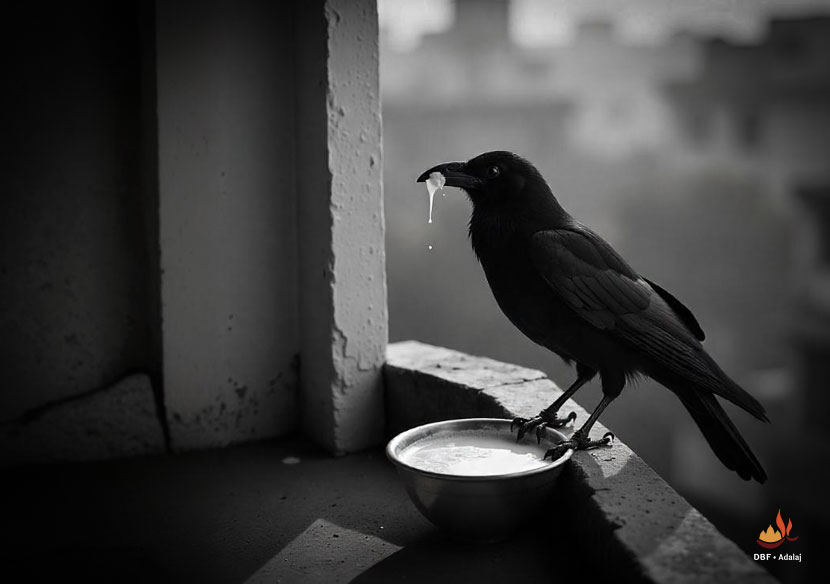
The principle is that as soon as the Soul leaves one body, it immediately acquires another body. Therefore, the ancestors who have passed away would have already taken on another body by now. If they are in a human body, how could they possibly come in the form of crows? Just as we remember our ancestors year after year and perform shraadh for them, in the same way, our children, grandchildren, or descendants from our past life may also be performing shraadh in our name today. So does that mean we leave our human body, become crows, and go to their rooftops to eat rice pudding and puris? No. Then how could this be possible? A human being does not have the authority to change their karma at will and become a crow. In this way, such beliefs have entered society merely through blind imitation, and people get swept away into superstition without thinking.
All these beliefs related to pitru dosh are false. In reality, there is no such thing as ancestors coming as crows. The principle of karma is that we ourselves have to experience the results of our own karmas. Moreover, there is no factual basis to the idea that performing such external rituals stops any supposed defect from affecting us. On the contrary, by doing so, we end up defaming our ancestors, holding them responsible for our difficulties and viewing them as at fault. For this, we should instead ask for their forgiveness. We should remember our ancestors with reverence and pray that wherever they may be, they attain happiness and peace. On the occasion of their death anniversary, we should remember our ancestors and ask forgiveness for any attachment or abhorrence we may have had toward them, so that our karmic accounts are cleared and vibrations of peace reach them wherever they may be. At most, in the name of our ancestors, we may give charity or perform meritorious acts and use money in a good and noble way. The purpose behind this is that the next generation should not simply consume all the wealth of the elders without doing any charitable or righteous deeds. However, according to the principle of karma, if we perform acts of punya (merit karma), the fruits of those acts will come to us alone; they will not reach our ancestors.
The arrangement made by our rishi-munis for performing sarvani and shraadh after the death of our elders had a specific purpose rooted in Ayurveda and science. Today, that purpose has been forgotten. Shraadh has been reduced to a mere ritual, and even that is often performed with superstition. Many years ago, when medicines for diseases such as malaria had not yet been discovered, the observance of shraadh began in the villages of India. Every year, the period from Bhadarva Sud Poonam to Bhadarva Vad Amas is known as Shraadh Paksha. During this time, in the month of Bhadarva, it was common to see a sick person lying on a cot outside almost every house in the villages. This is because, in the month of Bhadarva, due to the climate of the early autumn season, there is an aggravation of pitta in the body. During the monsoon season, the menace of mosquitoes increases greatly, and people with a pitta-dominant constitution are bitten more frequently. Malaria is referred to as the pitta fever. When a mosquito bites one person and then bites another, malaria spreads. At that time, no treatment for malaria had been discovered. When high fever occurred and no medicine was available, people died. As the epidemic spread, people began to die one after another. A situation arose where, if this condition was not controlled, India’s population would be reduced by half.
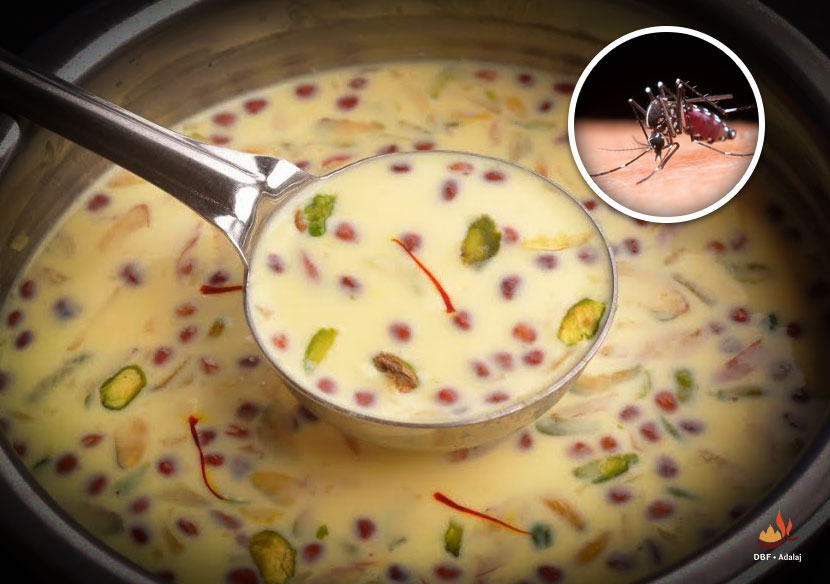
At that time, to pacify pitta fever, the rishis, munis, and saints explored remedies and arrived at the practice of consuming doodhpak or kheer daily during this period. Doodhpak contains milk and sugar, both of which help in calming pitta and thereby preventing the spread of malaria. However, there was a practical difficulty in implementing this. In those days, families were large, and not everyone was financially capable of preparing doodhpak every day for so many people in the household. As a result, people would not consume doodhpak regularly, and the illness would continue to spread. To resolve this, the practice was gradually introduced into society in the name of religion. If people could not prepare doodhpak daily at home, then under the observance of shraadh, they would prepare doodhpak and serve it to others. Thus, people began observing shraadh during the sixteen-day period from Bhadarva Poonam onward, during which they would prepare and serve doodhpak in the name of their departed relatives. On one day, doodhpak would be prepared at one person’s home and everyone would eat there. The next day, it would be prepared at another home and everyone would be served there. In this way, turn by turn, doodhpak would be prepared in one home after another, and through this arrangement people ended up consuming doodhpak every day. If someone tried to avoid it by saying, “I will not prepare doodhpak,” social pressure would be applied: “Are you not even performing shraadh in the name of your forefathers?” Because of this social pressure, ultimately that person too would serve everyone. People found this system workable, so it continued. By consuming doodhpak regularly, people’s pitta would be pacified, thereby reducing the likelihood of malaria and preventing deaths. Hence people would say that if one survived the sixteen days of shraadh, one had “entered Navratri,” meaning one had seen a “new night” and survived through it. In this way, the festival of Navratri came to be celebrated. Thus, the original purpose behind performing shraadh and associating it with ancestors was something altogether different. In reality, the act of feeding kheer does not actually deliver its results to the ancestors at all.
The law of nature is such that only after all karmic bonds with close relations are completed does the Soul depart from the body. Therefore, there is no coming together again. Hence, if religious practices such as shraadh are performed with understanding rather than superstition, their true purpose can be fulfilled. Today, when businesses have begun to flourish in society by nurturing superstition-based beliefs, it becomes necessary to reflect on how the liberation of any Soul could possibly be achieved through such means.

subscribe your email for our latest news and events
Dada Bhagwan Foundation, Adalaj is a spiritual non-profit organization whose goal is to spread peace, harmony and everlasting bliss to the whole world through the spiritual science of Akram Vignan.
Ask a question and Get an assured response


