


There are three types of suffering: 1) Suffering of the body 2) Suffering due to speech and 3) Suffering of the mind. The suffering of the body (physical suffering) is called ‘kashṭa’, which is considered direct suffering. When there is toothache, pain in the eyes, or paralysis, all these are sufferings of the body. Then, when someone speaks insulting words, they become ‘wounds’ of speech, which pierce the heart and then are never forgotten. These are sufferings due to speech. The third type of suffering is that of the mind (psychological suffering), where a person gets caught in the whirlpool of thoughts like “What will happen if this happens?” and becomes affected, sinking deeper into misery.
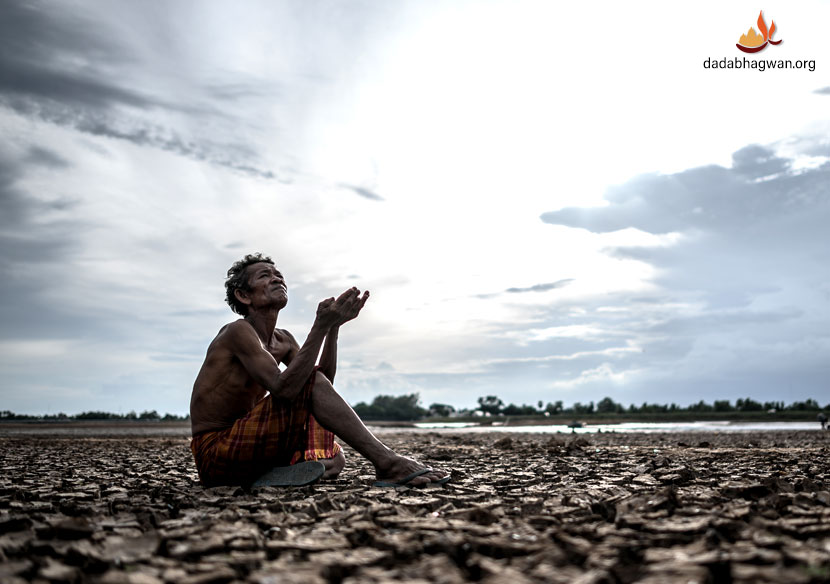
What really is the meaning of suffering? It is when one has nothing to eat, nothing to wear, or nowhere to sleep. The absence of food, clothing, and shelter is called suffering. In short, the suffering that touches the body is suffering. But the sufferings of the mind and through speech are self-invited; they are not true suffering at all! In this ocean-like worldly life, all suffering exists only because of the agitated mind.
Invited suffering is not real suffering
If a person is suffering from hunger, has pain in the ear, or a throbbing toothache, it can be considered as suffering. But if someone complains, “Why is there no ghee in my khichdi?” or “I don’t like the food,” then that is not true suffering. Because the body has no such complaint, it is only the outcry of the mind. Getting one’s hair cut is not suffering but yes, if the scissors prick the ear and there is pain, that is suffering. If one faces loss in business, yet has enough to live, eat, and drink, that is not true suffering. Some people face troubles at work saying their boss scolds them harshly or insults them in front of others; even that cannot be called suffering. At such times, turn your mind and remind yourself “After all, he does pay my salary, and my household is running fine, isn’t it?!” In the same way, there are certain social discomforts “What will people think if I don’t maintain such relations?” But none of these are true reasons for one to be suffering. If we keep crying and multiplying the sufferings born of beliefs and opinions, they only increase; but if we laugh and divide them, the sufferings simply scatter away.
The intellect of human beings has developed greatly. If a neighbour has a heart attack and we learn that he had chest pain, then when we ourselves feel some chest pain, the thought arises, “What if I get a heart attack?” These are sufferings of the mind. At such a time, one should say these thoughts, “You all get out! This body will depart when its time comes!” But the agitated mind keeps thinking, “Since it happened to him, what if it happens to me too?” and as a result, adverse effects follow. When one accepts that as suffering and keeps dwelling on those very thoughts, then even what was not meant to happen ends up happening. Thus, it is the effects of negative thoughts that spoil everything! Where there are no such thoughts, work succeeds, and where there are too many thoughts, things go wrong. This is not linked to the true meaning of suffering.
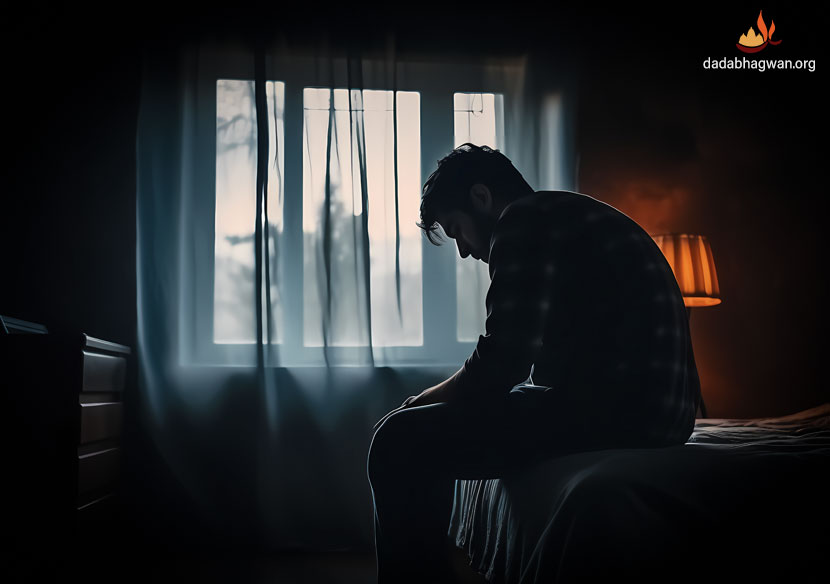
“He said this and that to me” this does not touch the body, and hence there is no suffering. When thoughts like “He always does this, he is like that,” keep arising, the mind gets disturbed. Then one ends up inviting suffering where there was none at all. In this way, people keep living in restlessness. Such unnecessary sufferings of the mind should simply be dismissed and if that is not possible, then at least they should not be accepted. Otherwise, the whirl of the mind will become a source of suffering.
Animals are simple by nature, their mind is limited and their intellect is limited too. That is why they do not have the kinds of suffering that humans do. When we offer food to a cow, it comes running; when we show it a stick, it runs away; that is the extent of its mind. Therefore, a cow does not have the mental suffering of thinking, “He insulted me by showing me the stick!” If we make the animals run away saying “shoo-shoo”, they will run off out of fear, but words have no effect on them nor do they suffer because of them. Human beings, however, may have a good home to live in and no difficulty in food or drink, yet the agitated mind keeps gathering suffering from all directions. In the end, unable to bear mental suffering, a person may take the step of shortening their life. But that is extremely dangerous, its consequences are very grave, and such a thought should never even arise. One should endure with patience and let that difficult time pass.
It is the law of Nature that when we give happiness to others, we will receive happiness and when we give suffering, we will receive suffering. Therefore, if we do not like suffering, we should stop giving it to others from this very moment. And if we happen to cause it, we should repent and turn back.
Suffering is that which has a remedy
This is a key to understanding the meaning of suffering. Param Pujya Dadashri gives a unique explanation, saying that only that which has a remedy can be called suffering and that which has no remedy is not suffering at all. This is a very subtle point. For example, if a person is born with one finger missing, it is not called suffering, because there is no remedy for it. But if there is an abscess on the foot, that is called suffering, because it can be cured, there is a remedy for it. If there is pain in the tooth, that too is called suffering, because one can go to the doctor, take medicine, or have the tooth removed.
In short, whenever any situation arises, examine whether there is a remedy for it. If there is, take the remedy and do not be miserable. If there is no remedy at all and the situation cannot be changed, then accept it. In this way, by either means, do not become unhappy.
The true path to freedom from suffering
In this era, most human beings remain restless and distressed due to mental and physical suffering. As a result, they seek happiness in earning money and indulging in the pleasures of the five senses. Not only that, some people go so far as to gain unrightfully deceiving others and causing sorrow to their own family members all in pursuit of keeping themselves engrossed in wealth and sensual pleasures. No one stops to analyze whether true happiness has actually increased or decreased through all this?
Truly, if one wishes to be free from suffering, then from today itself one should stop causing suffering to others. The sufferings we experience today are the results of the suffering we have caused others in the past. They should be settled with equanimity, and new causes should be corrected. Revealing the simple way to attain happiness and peace in life, Param Pujya Dada Bhagwan says that, “If a person were to use his mind, speech and body for the happiness of others, then he would never be short of happiness in worldly life.”

In the end, when a person attains Self-realization, eternal bliss is attained in life. But until Self-realization is achieved, walking on the path of service and benevolence, establishes happiness and peace in life.


