


Lord Shiva
"Pujya Deepakbhai offers a Gnani's understanding of the deeper spiritual meaning of "Shiva"."


According to scriptures, Lord Shiva is God who was residing in the Himalayan Mountains. Parvati was his wife and Ganesh and Kartik were His sons. These are physical attributes but in true sense any human being who attains 'Self Realization' achieves the internal state of 'Shiva'.
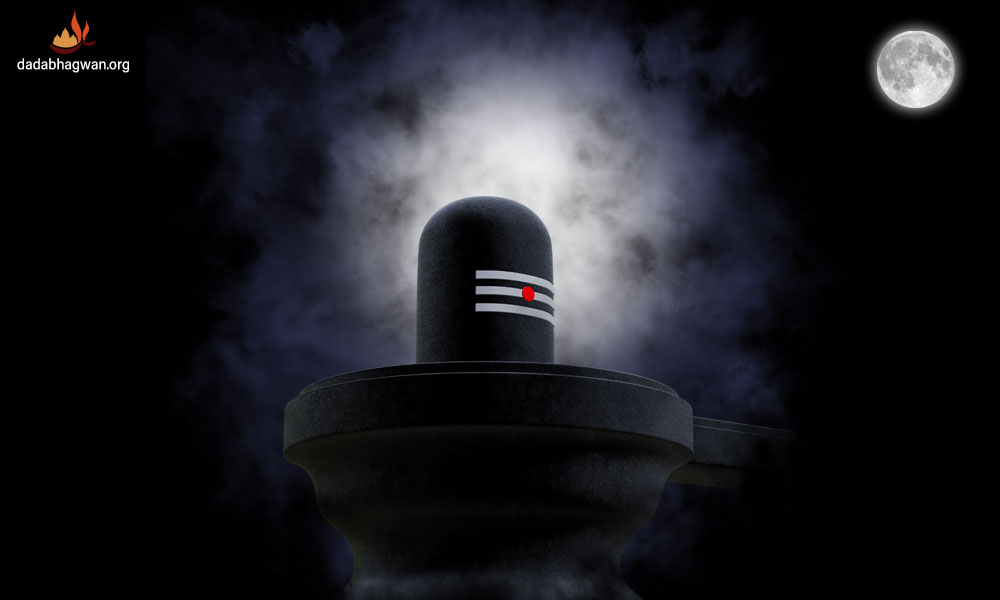
In true meaning, the One who has become ‘kalyan swaroop’ (the embodiment of salvation) is called Shiva. Thus, Shiva symbolizes the embodiment of salvation i.e. the Gnani.
The story suggests that, when Lord Shiva drank the venom that came out during the Samudra-Manthan, due to the poison that he consumed, his throat became blue and hence he got the name Neelkanth. The essence behind the word "Neelkanth" is that one who has swallowed all the poisons (abuses and insults) given to Him in this world with equanimity and yet offered blessings to others, hence becoming Lord Shiva.
It means that if someone says something that we do not like, then we should drink the insult peacefully. Moreover, we shall pray for the person accusing us, “May God give him the right understanding.” When we do this, we too will become Lord Shiva one day. All Enlightened beings have done this in their life. That’s why they are called ‘kalyan swaroop’
Param Pujya Dada Bhagwan says...
“You will certainly have to drink the poison. It is your karmic account, so the glass [of poison] will certainly come before you. Then whether you choose to drink it with a smile or whether you drink it with a sullen face, you will have to drink it. Hey! Even if you do not want to drink it at all, people will make you drink it forcibly. Instead, why not drink it with a smile, while giving the person blessings? Besides this, how else can you become Neelkantha?
Those who come and give you these glasses are actually coming to raise You to an elevated state. However, if you have a sullen face at that point, then that [state] will move away from you. Whoever in this world has given me glasses of poison, I have drunk them with a smiling face, while blessing them, and have become Mahadev(Lord Shiva).
If the other person gives you something bitter to drink, and you drink it with a smiling face while giving blessings, then on one hand your ego will be cleansed and you will become free to that extent. And on the other hand, the other person, the one who gives the bitter drink, will also turn back. He will also feel better. He will realize, ‘It is my weakness to serve him this bitter drink, and this person who is drinking it with a smile on his face, is extremely powerful.’

"Pujya Deepakbhai offers a Gnani's understanding of the deeper spiritual meaning of "Shiva"."
Lord Shiva shown in the statue is a symbol for worshipping the Soul. Therefore, we say “Om Namo Shivay!”
Gnani says, “This is the real stage. If you want to achieve the Shiv-dasha, you have to realize the Self i.e. who am I.” However, we believe the statue to be God and we pray. By praying, we are developing the relative part (that which we consider to be our self, other than the Soul), as a result of which we will get worldly happiness i.e. a good wife, good children, good religion, etc.
But when we realize our own Soul, automatically our path of salvation starts. And then, we will get a higher and higher relative level on the outside, and inside we will be getting liberation (mukti).
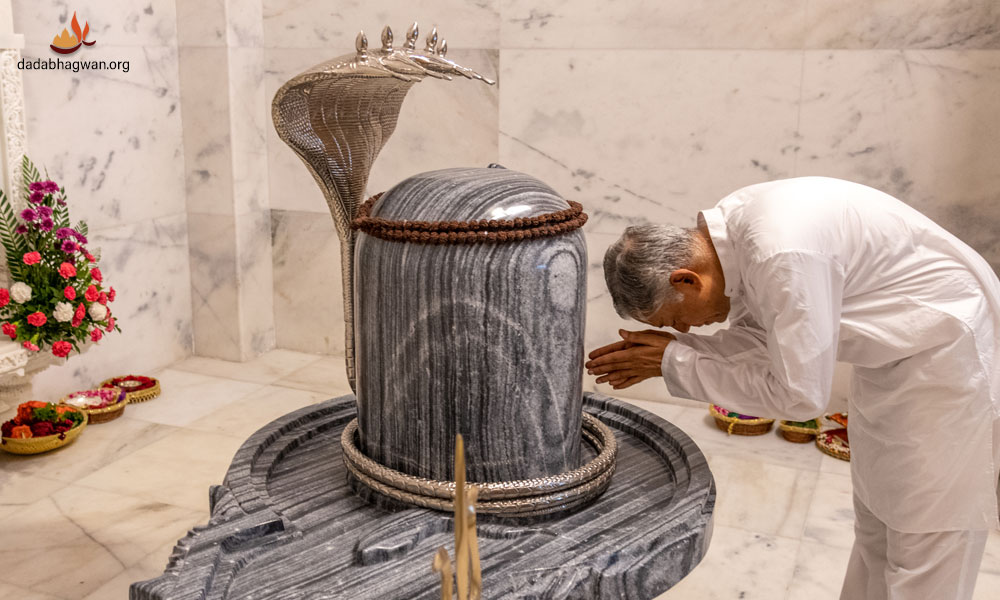
So, in the ignorant state (Jiv dasha), since one considers himself separate from Shiva, one says 'Om Namah Shivay' (I bow to Shiva). But after attaining Self Realization, one attains the constant awareness of Soul, separate from the body, and then he experiences ‘Shivoham, Shivoham... (I am Shiva, I am Shiva). I am a Soul and not the body’. Thereafter, there remains no distinction between Lord Shiva and one's true self i.e. the Soul.
Param Pujya Dadashri achieved Self Realization (experience of the Soul) in June 1958. He used to impart the same 'Self Realization' to others in just 2 hours. Pujya Dr. Niruma attained Self Realization from Param Pujya Dadashri in 1968.
You too can experience Self Realization by attending 'Gnan Vidhi' by Pujya Deepakbhai. After receiving Gnan and by observing five Agnas (the fundamental principles) you will be led to ultimate salvation.

subscribe your email for our latest news and events


